Casa Batlló
A Barcelona apartment house transformed into Gaudí’s most intimate world of light, colour and flowing form.
Casa Batlló is one of Gaudí’s most recognisable works, but its façade is only the beginning. The visit is largely an interior experience: rooms, staircases, a blue light well, attic and rooftop reveal how he redesigned an ordinary city house from the inside out. Several ticket levels offer different routes and immersive additions, so choosing carefully matters.
Casa Batlló at a glance
- Location
- Passeig de Gràcia, 43 · Barcelona
- Area
- Eixample
- Recommended visit
- Approx. 1–1.5 hours
- Advance booking
- Recommended for your preferred time and experience
- Gaudí remodelled
- 1904–1906
- UNESCO
- Part of the Works of Antoni Gaudí since 2005
- Best time to visit
- Early morning or later afternoon
- Accessibility
- Lifts provide access throughout the visitor route, including the roof — View accessibility ↓
- Opening hours
- General visits currently run daily from 09:00 to 19:15 — View opening hours ↓
- Tickets
- Blue, Silver, Gold and Platinum levels are currently offered — View ticket options ↓
About Casa Batlló
Casa Batlló is a residential building on Passeig de Gràcia, the grand avenue where Barcelona’s prosperous families commissioned increasingly ambitious homes at the turn of the twentieth century. Its neighbours include Casa Amatller and Casa Lleó Morera, making this stretch the celebrated “Block of Discord” of competing Modernista visions.
The building matters because it lets you experience Gaudí at domestic scale. A handrail fits the palm, doors ripple around rooms and a carefully graded blue light well carries daylight through the house. Sagrada Família overwhelms through size; Casa Batlló persuades through the accumulation of human-sized decisions.
The history of Casa Batlló
The original house was built in 1877 by architect Emili Sala Cortés, one of Gaudí’s former teachers. Textile industrialist Josep Batlló bought it in 1903 and gave Gaudí broad freedom to rethink the property. Although demolition was considered, Gaudí retained the existing structure and carried out a complete transformation between 1904 and 1906.
He reshaped the façade, reorganised the internal partitions, enlarged the central light well and reworked ventilation, circulation and decoration. The Batlló family occupied the principal residence while other floors continued as apartments, so the design had to be both expressive and functional.
The house left the Batlló family in the 1950s and later passed to the Bernat family, who restored it and opened it to the public. Cultural visits began in the 1990s and expanded from 2002. Casa Batlló joined the UNESCO-listed Works of Antoni Gaudí in 2005.
Gaudí and Casa Batlló
Casa Batlló belongs to Gaudí’s mature period, immediately before his work on Casa Milà. Instead of applying decoration to a conventional plan, he made structure, craft and environmental performance part of the same language. Windows change size to balance daylight, vents can be adjusted and curved surfaces guide movement without sharp interruptions.
Nature is present as a method rather than a literal theme. Bone-like supports, shell forms, scales, waves and plant-like joinery invite interpretation, but the building never settles into one simple story. The roof is often read as a dragon’s back and the turret as the sword of Saint George; Gaudí left enough ambiguity for the architecture to stay alive in the imagination.
Read more about the architect’s wider development in our guide to Antoni Gaudí.
What to see at Casa Batlló
The façade
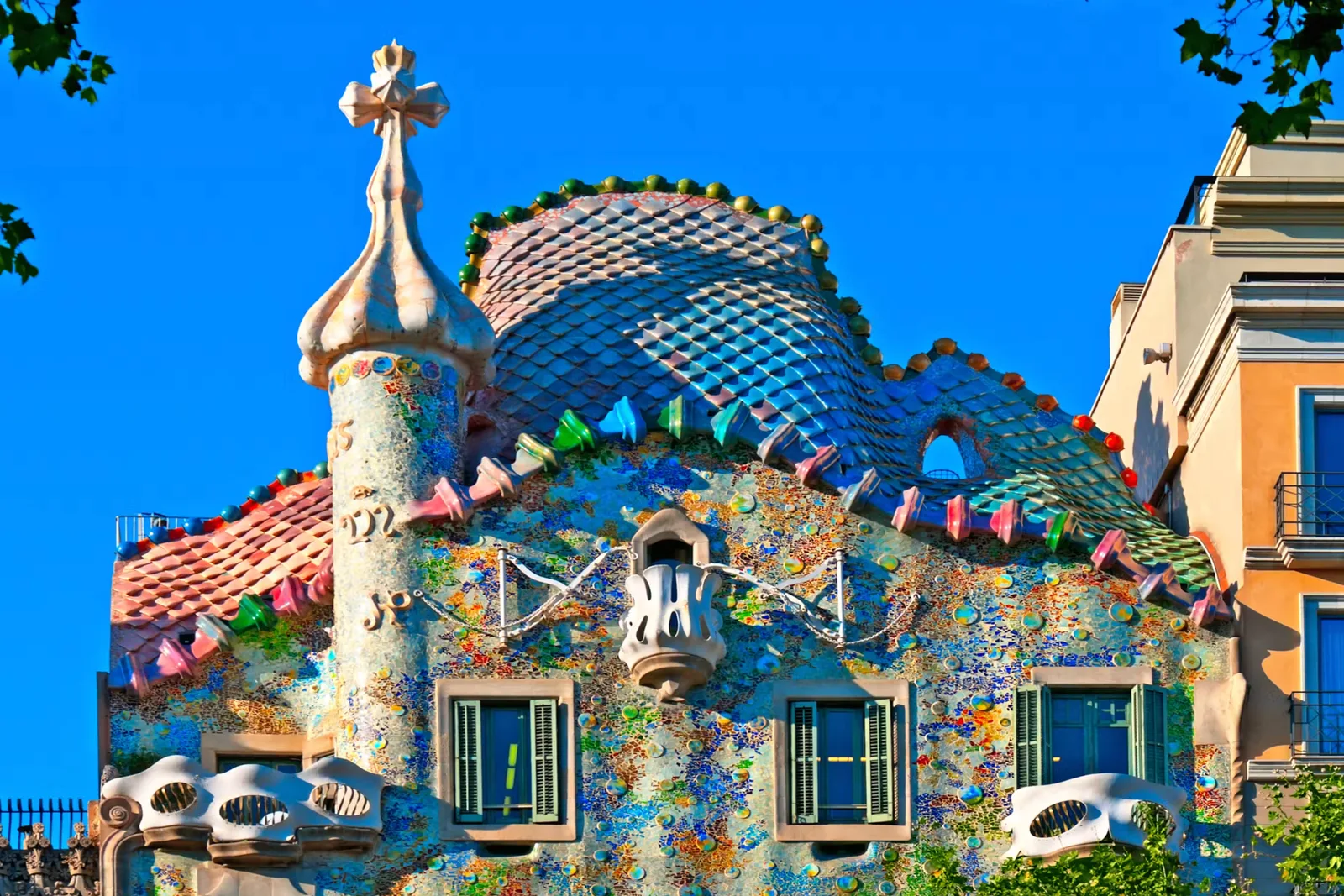
Cross Passeig de Gràcia before entering so you can read the whole elevation. Stone columns, mask-like balconies, coloured glass and ceramic fragments make the surface change with daylight. The roof’s large ceramic scales pull the composition together rather than acting as a separate crown.
The Noble Floor
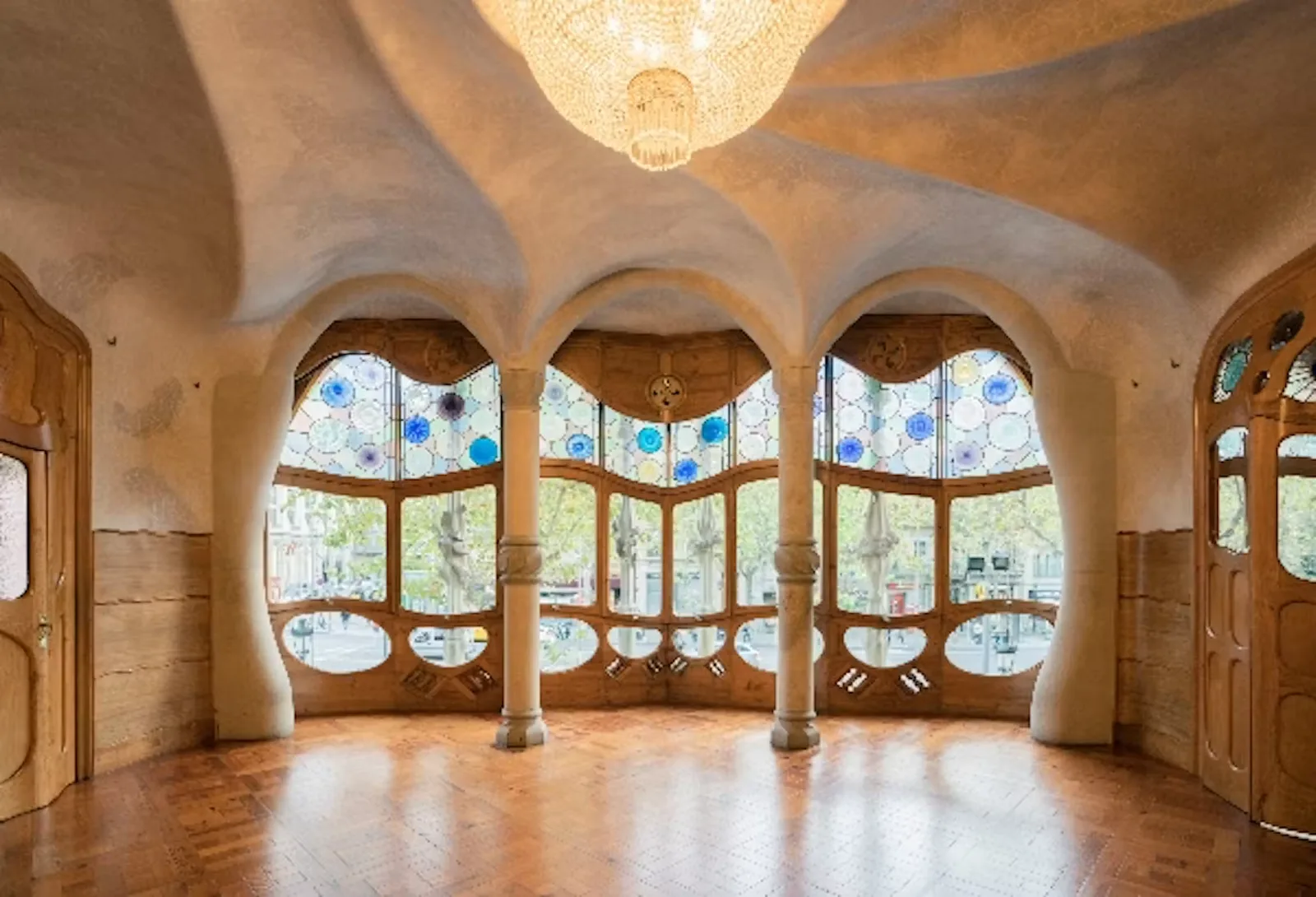
The Batlló family’s principal apartment is the emotional centre of the visit. In the main salon, a sweeping ceiling, sculpted fireplace and broad window bay turn a formal reception room into a continuous landscape of wood, glass and plaster.
The central light well
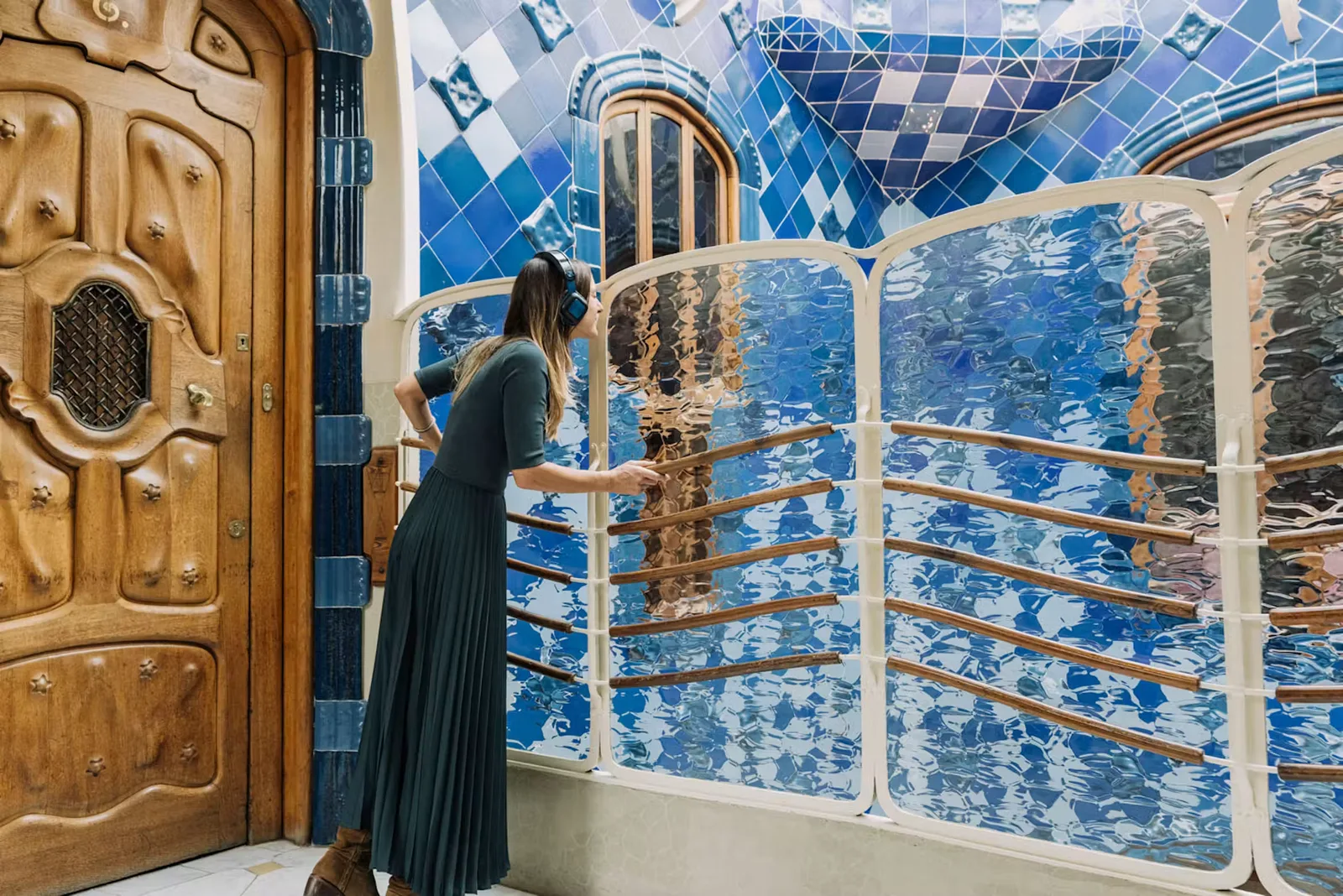
Look at how the tiles deepen from pale blue below to cobalt above, while windows become smaller towards the roof. Both decisions help distribute daylight more evenly through the tall interior—a practical solution made visually unforgettable.
Staircases and organic interiors
Gaudí designed the route as much as the rooms. Curved walls, tactile handrails, ventilating doors and carefully framed transitions make movement feel fluid. Slow down at the joinery: some of the building’s best ideas are small enough to touch.
The attic
A sequence of white catenary arches forms a bright, rib-like service space beneath the roof. Its restraint is a useful counterpoint to the colour below and shows how Gaudí could create drama through structure alone.
The rooftop and chimneys
The roof brings ventilation, chimneys and water storage into a sculptural skyline. Access is currently included from the Silver level upwards, not with every ticket, so check your selected product if the dragon-back roof is essential to your visit.
The immersive rooms
The Gaudí Cube concludes the core route with a 360-degree work by Refik Anadol and is included across the current colour tiers. Higher tiers add experiences such as the Gaudí Dôme, augmented-reality interpretation and extra historic rooms. Treat these as layers around the architecture, not substitutes for looking at the house itself.
Is Casa Batlló worth visiting?
Casa Batlló is worth visiting when you want to understand Gaudí through interiors rather than a façade alone. The Noble Floor, blue light well, attic and small functional details show how thoroughly he could rethink everyday domestic space. The audio and digital layers make the building approachable even without architectural knowledge.
The honest trade-off is price versus duration. This is a compact house and higher ticket tiers can make a 75-minute visit expensive. If colour, craft, interior design and theatrical presentation excite you, that intensity is part of the value. If you mainly want a long rooftop walk, a less mediated visit or the clearest explanation of structure, La Pedrera may fit better.
Casa Batlló or La Pedrera?
Choose Casa Batlló if…
You want the more colourful, decorative and theatrical experience. Its route is compact, the interiors feel organic and intimate, and digital interpretation plays a larger role. It is especially strong for visitors drawn to craft, atmosphere and visual surprise.
Choose La Pedrera if…
You want a larger building whose structure, courtyards, apartment plan and attic are easier to read as architecture. Its rooftop journey is longer and more open, while the overall experience generally feels less like an immersive production.
If time and budget allow, the houses complement each other and sit around a ten-minute walk apart. Otherwise, our complete Casa Batlló versus La Pedrera comparison can help you decide.

Planning your Casa Batlló visit
How much time do you need at Casa Batlló?
A quick visit through the core Blue route can take about an hour. Allow around 1 to 1.5 hours for a normal first visit, especially if your ticket includes the rooftop. Gold or Platinum visitors who want to use the augmented-reality content, explore the private rooms and spend time in the immersive spaces should avoid booking the next attraction immediately afterwards.
Best time to visit Casa Batlló
An early entry gives you the freshest attention for the Noble Floor and can make the compact interiors easier to absorb. Later-afternoon slots can work well when you are already exploring Passeig de Gràcia. Casa Batlló also offers seasonal evening formats, but their content and hours differ from the standard daytime visit.
Whichever time you choose, arrive for the booked slot rather than trying to enter early. Current visitor guidance allows a 15-minute entry window from the selected time.
Casa Batlló opening hours
The current General Visit runs every day of the year from 09:00 to 19:15. Other experiences—including early-entry, evening or concert formats—can use different schedules. Check the available entry times and the exact route for your chosen date when booking.
Location and how to get there
Casa Batlló is at Passeig de Gràcia, 43, in central Eixample. Metro lines L3 and L4 stop at Passeig de Gràcia, as do R2 Nord and R2 Sud trains. Plaça Catalunya and Diagonal are each around a ten-minute walk away.
La Pedrera is farther north on the same avenue, making the two houses easy to combine without another transport journey. If you book both, leave breathing room between their timed entries so the details do not blur together.
Accessibility
Casa Batlló states that wheelchair users can visit the complete house, including the newer rooms and roof terrace. Two lifts give priority to visitors with disabilities, people with reduced mobility and pregnant visitors.
The historical building still contains compact spaces and can feel busy. Subtitled tablets are available for visitors with hearing impairments, and the audio guide provides detailed interpretation for visitors with visual impairments. Check current assistance arrangements before travelling when you have specific needs.
Casa Batlló tickets explained
Casa Batlló currently uses four colour tiers for its General Visit. Every level includes the principal house route, audio interpretation and Gaudí Cube; the most important practical differences are rooftop access, added immersive interpretation, private historic rooms and booking flexibility.
Ticket names, temporary exhibitions and extras can change. Compare the exact live inclusions for your date before paying rather than relying on colour alone.
| Ticket level | Best for | VisitGaudí advice |
|---|---|---|
| Blue | The essential interior route | Includes the audio-guided house visit and Gaudí Cube. It is the most economical way to understand the core architecture, but the rooftop is not currently included. |
| Silver | Most first-time visitors | Adds the Dragon’s Rooftop to the core visit. This is our balanced choice when the roof is important and you do not need every immersive or private-room extra. |
| Gold | Gaudí fans wanting greater depth | Adds an augmented-reality tablet, Gaudí Dôme, Original Concierge Room and the Batlló family’s private residence. The extra historic spaces provide the most meaningful upgrade. |
| Platinum | Maximum flexibility and the fullest package | Builds on the premium route with more flexible booking conditions. It is most useful when rescheduling or cancellation value matters; confirm the live benefits before paying. |
Popular entry times can sell out. Booking in advance is recommended, especially if you want a specific experience or time slot. If one tier is unavailable, another ticket level, guided visit or combination product may still have places.
Independent VisitGaudí guide · Tiqets is an external booking platform. We may earn a commission at no extra cost to you.
Can you visit Casa Batlló and La Pedrera on the same day?
Yes. Both are on Passeig de Gràcia and the walk between them is short. The combination is valuable when you genuinely want to compare two very different approaches to urban housing: Casa Batlló is intimate and decorative; La Pedrera is larger and more structural.
Plan at least a relaxed half-day rather than placing the time slots back-to-back. You can also pair Casa Batlló with Sagrada Família, use our Gaudí in one day route or compare ticket formats across the main landmarks.
Frequently asked questions
What is Casa Batlló?
Casa Batlló is an apartment building on Passeig de Gràcia that Antoni Gaudí completely remodelled between 1904 and 1906 for textile industrialist Josep Batlló. It is part of UNESCO’s Works of Antoni Gaudí.
Is Casa Batlló worth visiting?
Yes for visitors who enjoy interiors, craft, colour and immersive interpretation. It is a relatively compact and premium-priced experience, so travellers mainly interested in scale or structure may prefer Sagrada Família or La Pedrera.
Which Casa Batlló ticket should I choose?
Silver is the balanced choice for most first-time visitors because it adds the rooftop to the core house route. Blue suits a lower budget, Gold adds the strongest extra historical and immersive content, and Platinum is mainly valuable for its fullest package and flexibility.
Is the Casa Batlló rooftop included?
Not with every current ticket. The official comparison presently includes the Dragon’s Rooftop with Silver, Gold and Platinum, but not Blue. Always confirm the live inclusions of the exact product you select.
How long do you need at Casa Batlló?
Allow around 1 to 1.5 hours. A focused Blue visit can be close to an hour; upgraded routes, photography and immersive rooms can take longer.
Casa Batlló or La Pedrera?
Choose Casa Batlló for a compact, colourful and theatrical interior. Choose La Pedrera for a larger architectural journey, apartment context, attic exhibition and extended rooftop experience.
Is Casa Batlló wheelchair accessible?
Casa Batlló states that wheelchair users can visit the complete house, including the newer rooms and roof terrace, using priority lifts. Narrow historic spaces and busy periods can still affect comfort.
Can I visit Casa Batlló and La Pedrera on the same day?
Yes. They are on the same avenue and around a ten-minute walk apart. Leave space between timed entries so two detailed interiors do not blur into one another.