Gaudí’s works
in Barcelona.
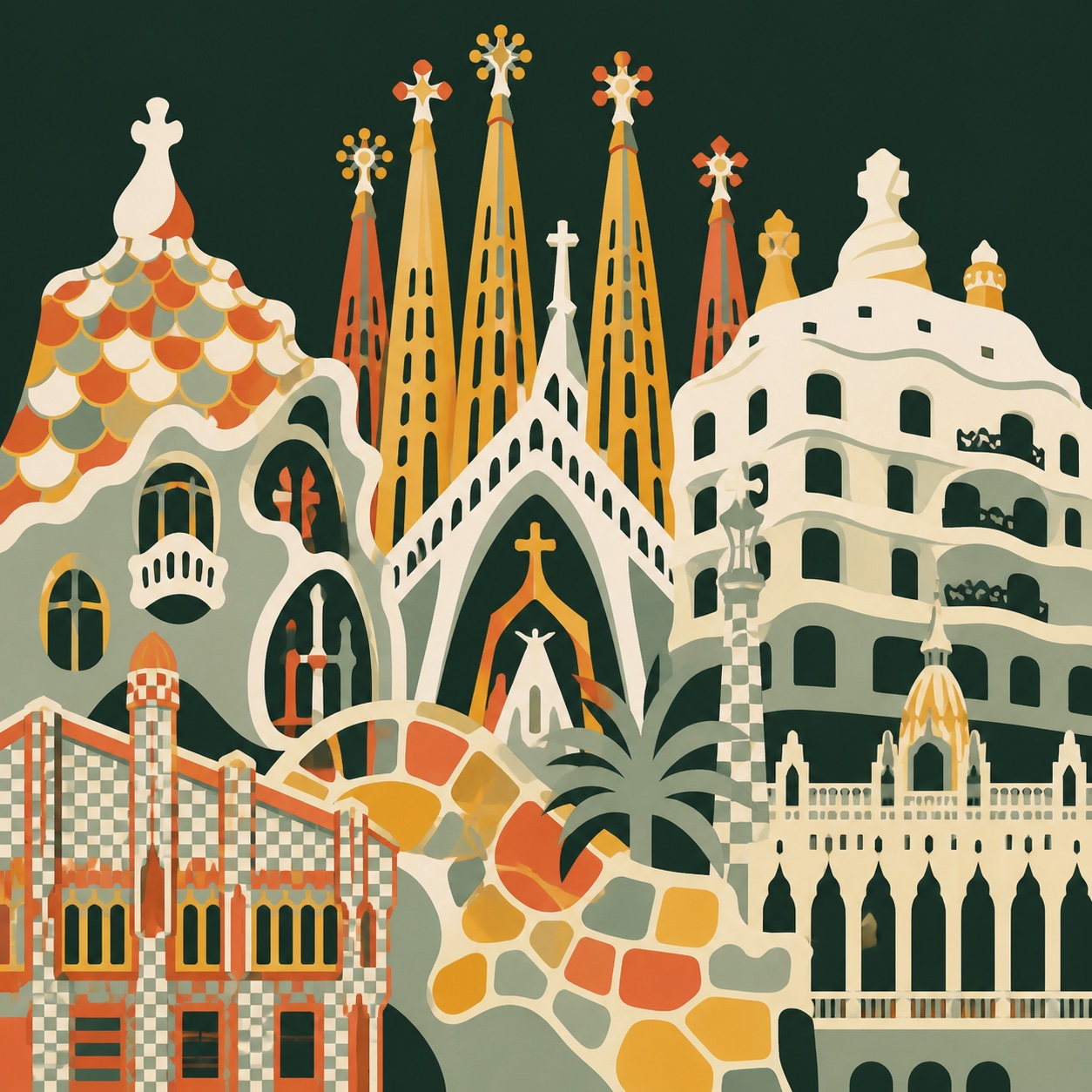
Gaudí never repeated the same idea twice. Across houses, a park, a palace and a basilica, he kept asking how architecture could move, breathe, carry light and feel alive.
Meet the six essential landmarks, understand where each sits in his creative journey and choose the experience that belongs in yours.
There is no single
typical Gaudí.
A first visit often begins with Sagrada Família, but Gaudí becomes more interesting when you compare his works. Park Güell opens his architecture to the landscape. Casa Batlló and Casa Milà rethink city living. Casa Vicens and Palau Güell reveal the experiments that came before.
Begin with the works that changed Barcelona.
Sagrada Família and Park Güell show Gaudí working at his largest scale. One transforms stone and light into a basilica; the other lets architecture grow through a hillside.
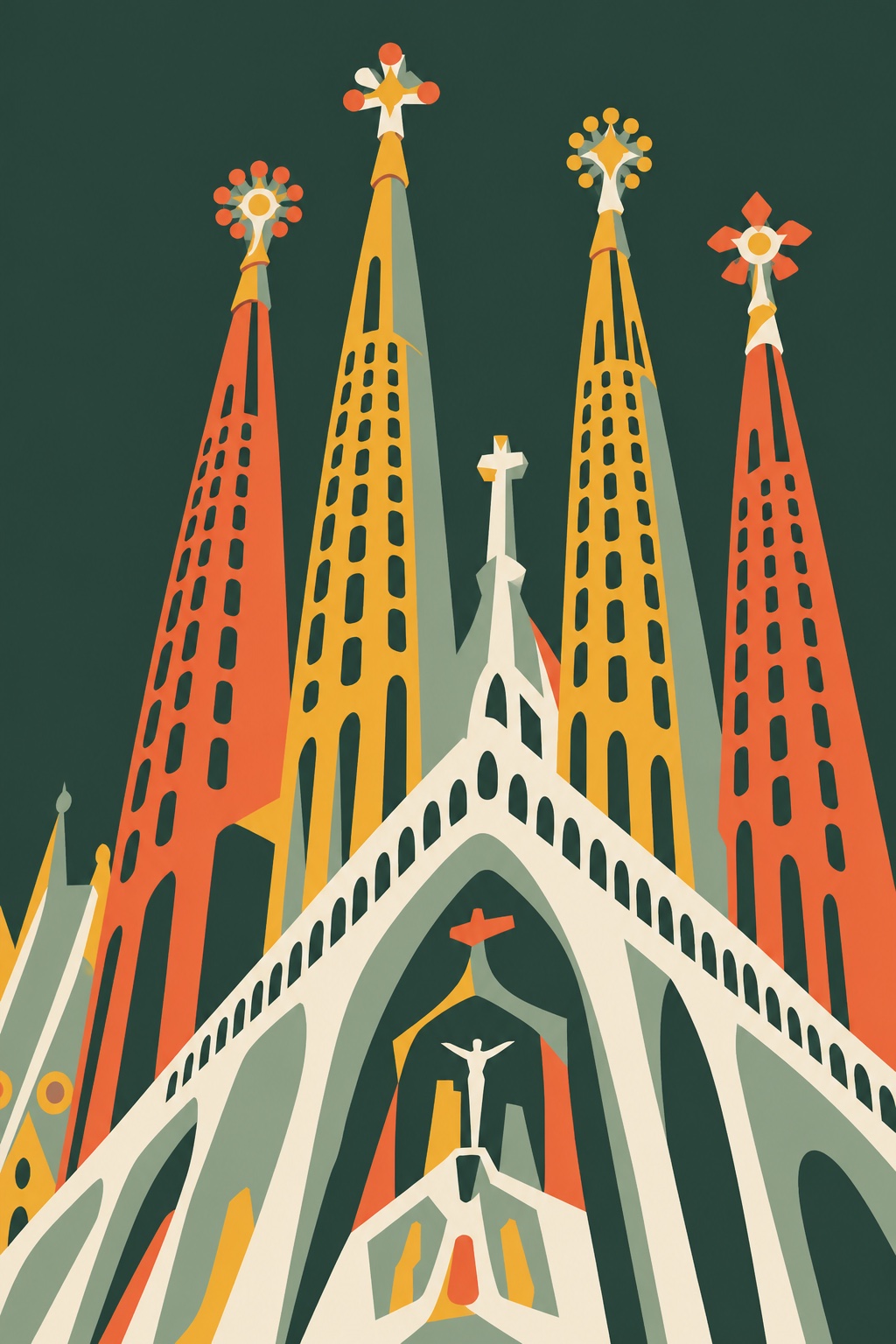
Sagrada Família
Gaudí’s most ambitious work brings structure, symbolism, sculpture and coloured light together on a scale found nowhere else in Barcelona.
It is the clearest place to understand how he turned lessons from nature into architecture—and why his ideas still feel radical.
- Best for
- A first Gaudí visit
- Allow
- 1.5–2 hours
- Area
- Eixample
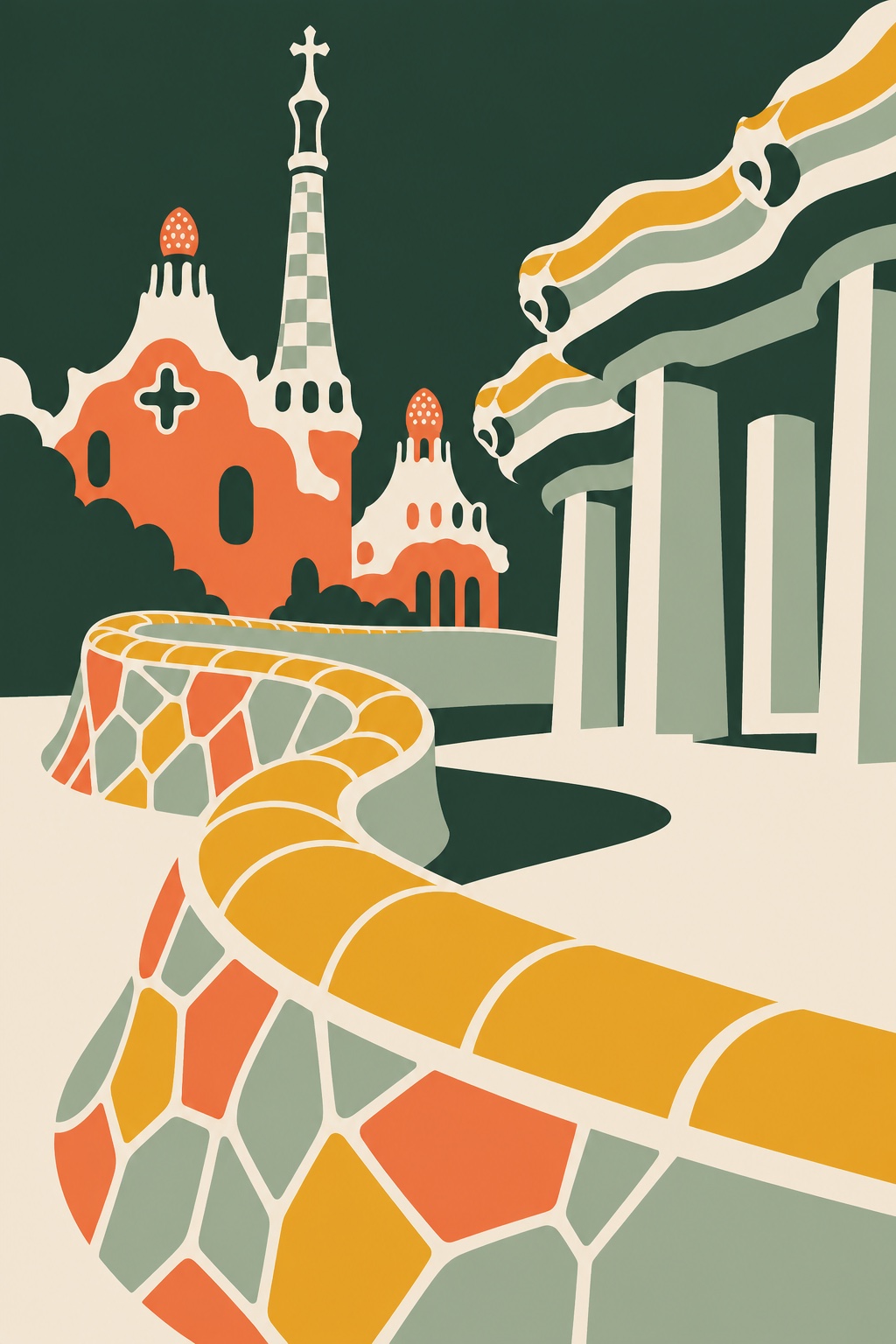
Park Güell
Paths, viaducts, mosaic surfaces and city views make Park Güell Gaudí’s most expansive outdoor experience.
The park reveals his playful side, but also his ability to shape movement, drainage and structure around the contours of a real landscape.
- Best for
- Open air, mosaics and views
- Allow
- 1.5–2 hours
- Area
- Gràcia hillside
See everyday architecture become extraordinary.
On Passeig de Gràcia, Casa Batlló and Casa Milà sit only a short walk apart. Their personalities are very different: one is intimate and theatrical, the other spacious and structural.
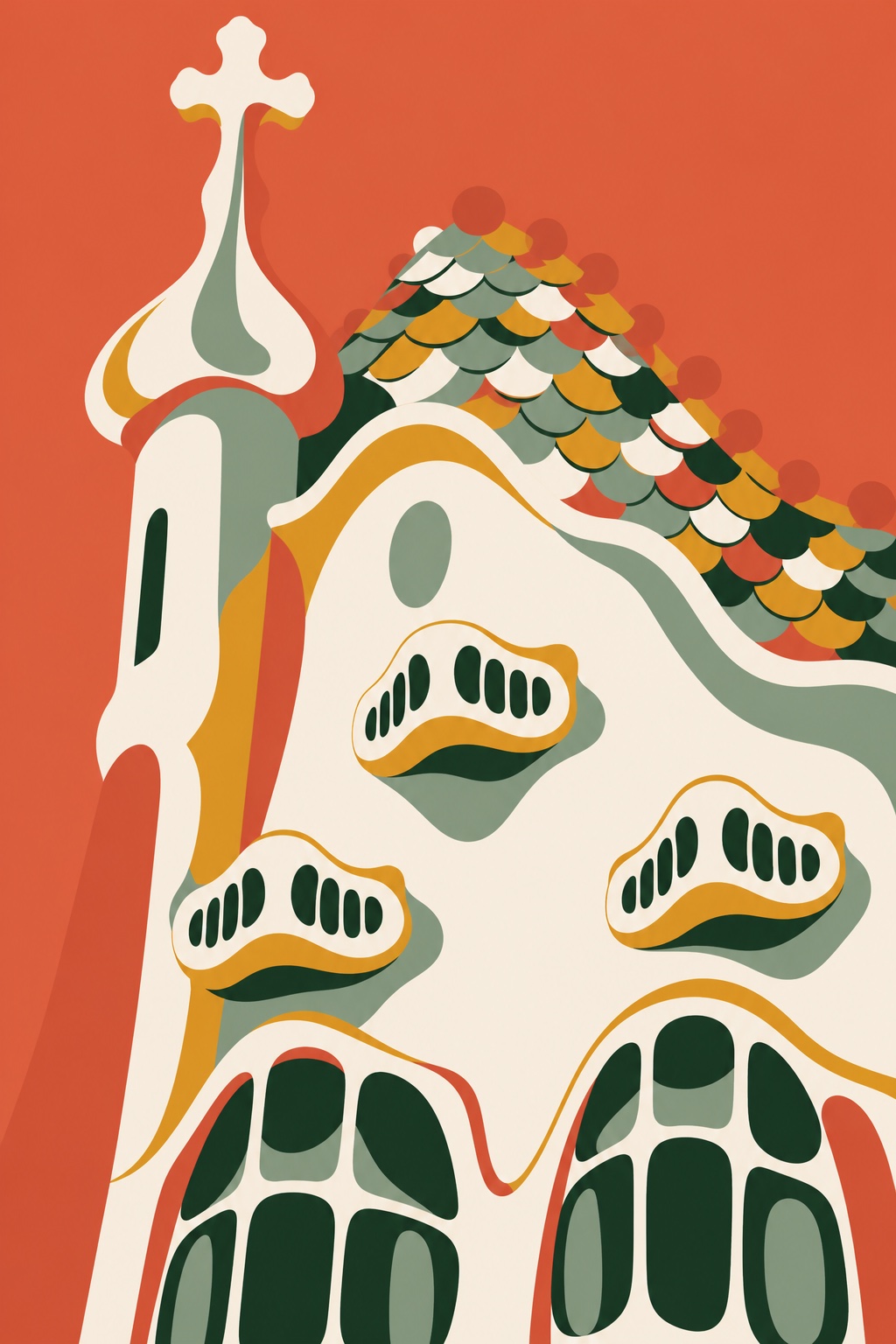
Casa Batlló
Behind its unmistakable façade, Casa Batlló unfolds as a carefully choreographed journey through light, ventilation, craft and organic form.
Gaudí did not start with an empty site: he transformed an existing house, showing how invention could reach from the street façade to the smallest interior detail.
- Best for
- Immersive interiors and colour
- Allow
- 1–1.5 hours
- Area
- Passeig de Gràcia
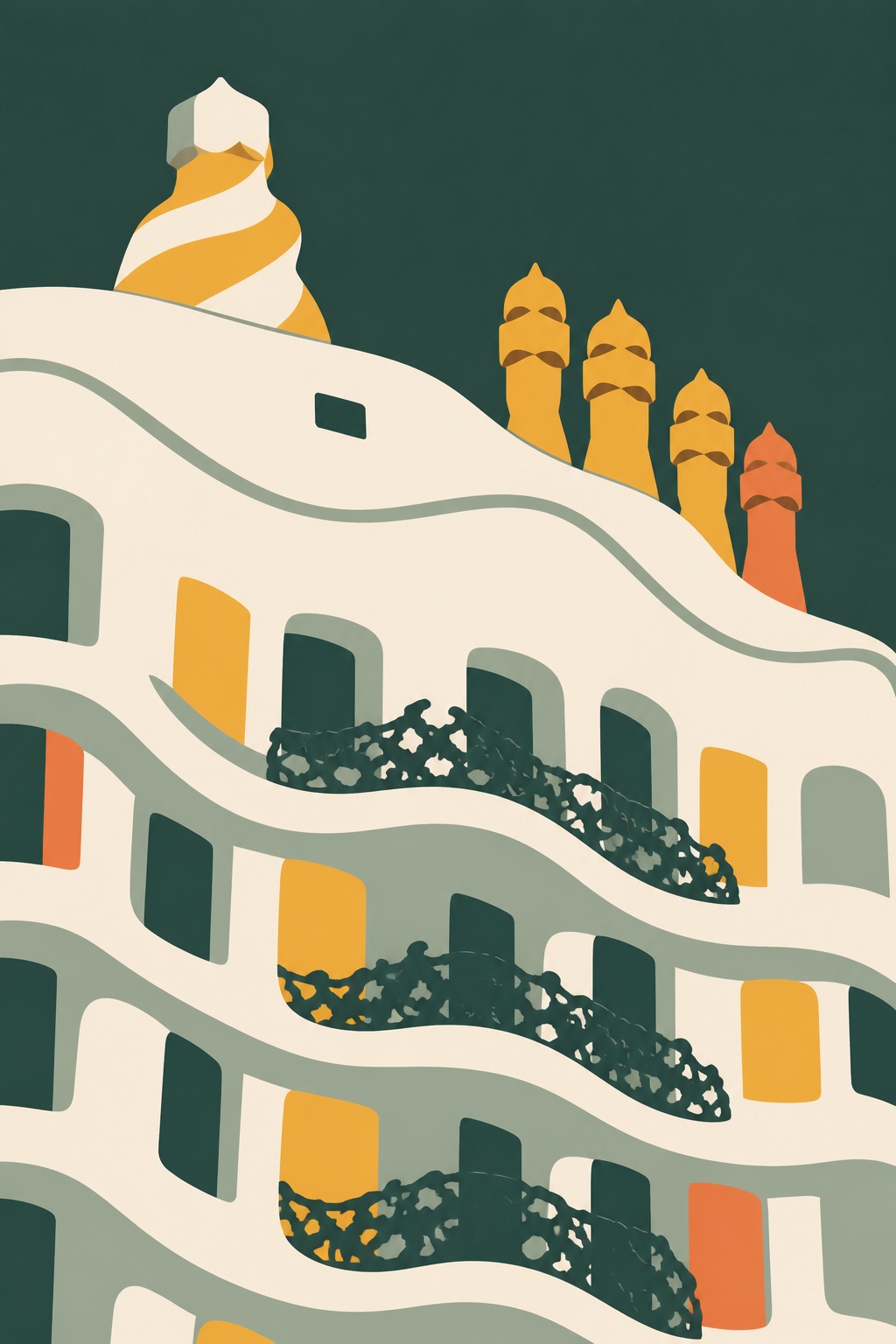
Casa Milà · La Pedrera
Casa Milà replaces conventional straight walls with a flowing stone exterior, open courtyards and one of Barcelona’s most remarkable rooftops.
It is an especially rewarding visit for anyone curious about how Gaudí joined structure, daylight, circulation and sculpture into one complete building.
- Best for
- Rooftops and architectural ideas
- Allow
- About 1.5 hours
- Area
- Passeig de Gràcia
Discover the ideas before they became icons.
Casa Vicens and Palau Güell reveal an ambitious younger Gaudí testing colour, materials, engineering and atmosphere. Both make the evolution of his later work easier to see.
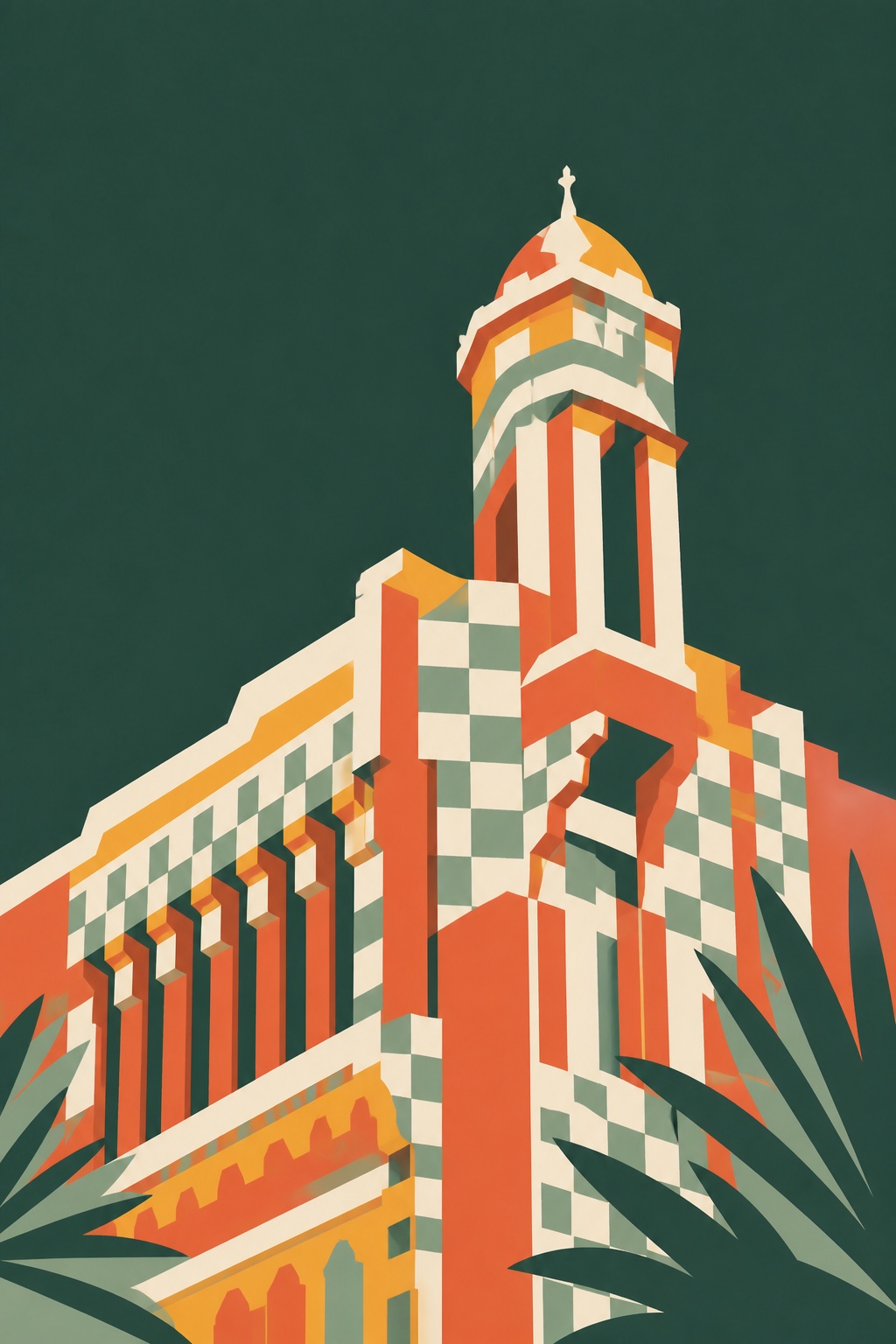
Casa Vicens
Geometric tiles, rich colour and references to plants turn this compact house into a confident early statement.
Casa Vicens shows Gaudí before the flowing forms of his mature period, making it one of the best places to see where his architectural language began.
- Best for
- Pattern, colour and a quieter visit
- Allow
- 1–1.5 hours
- Area
- Gràcia
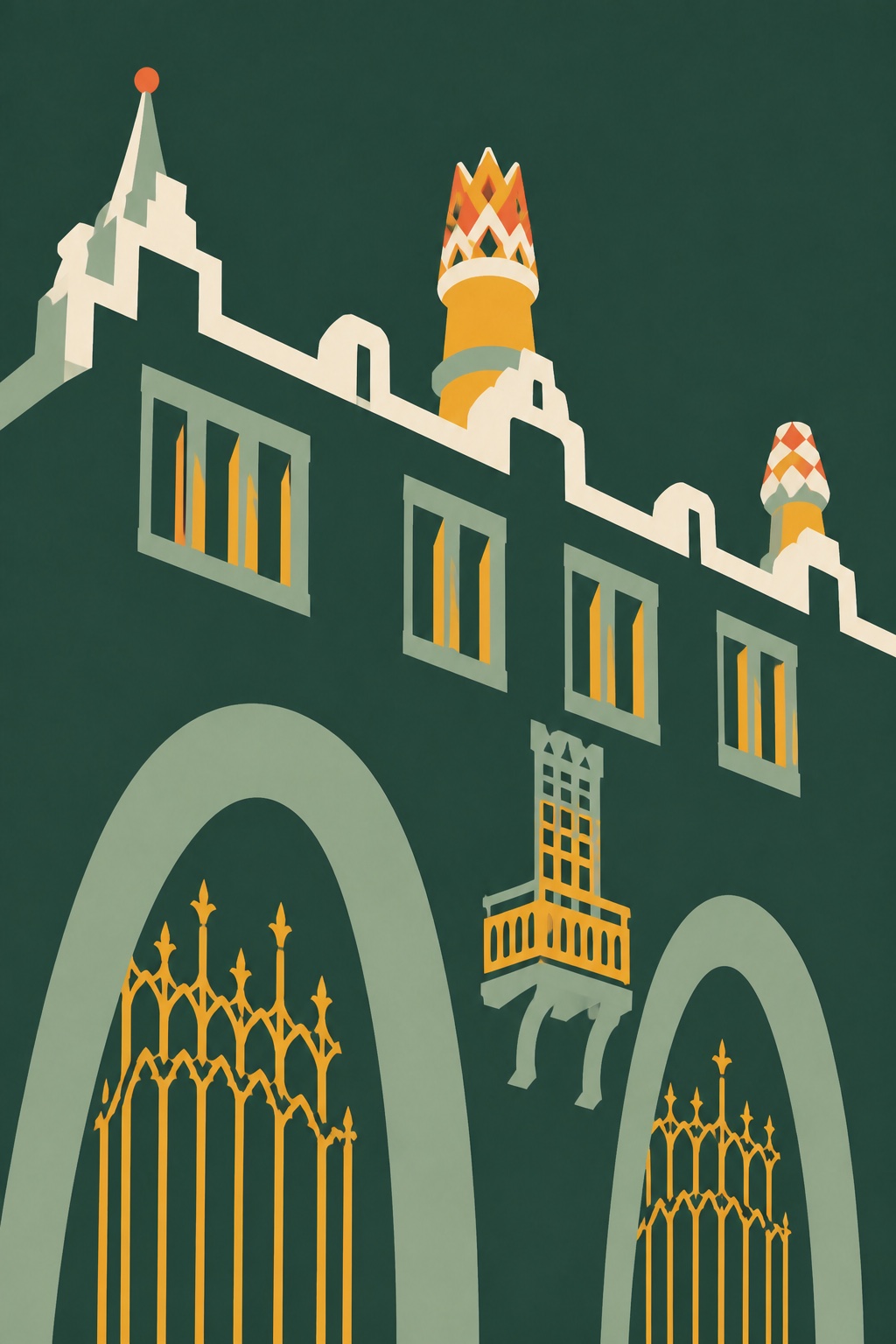
Palau Güell
A restrained stone façade gives way to stables, ironwork, a soaring central hall and a rooftop alive with sculptural chimneys.
Created for Gaudí’s patron Eusebi Güell, the palace shows how theatrical space and practical engineering were already inseparable in his work.
- Best for
- Atmosphere, history and interiors
- Allow
- 1–1.5 hours
- Area
- El Raval
From ornament
to living structure.
Gaudí’s buildings are often remembered for colour and unusual shapes. Look across the six works, though, and a deeper progression appears: decoration becomes structure, structure follows natural forces, and every practical detail joins the whole.
The early houses test materials and atmosphere. The mature city buildings free façades, courtyards and rooftops from convention. Park Güell and Sagrada Família expand those ideas until architecture shapes an entire landscape or a shared spiritual space.
Plan less travel.
See more Gaudí.
Timed entries and Barcelona’s geography matter. Start with the work you care about most, then build the rest of the day around its neighbourhood.
Useful answers for
your first plan.
Which Gaudí work should I visit first?
For most first-time visitors, start with Sagrada Família. It brings together Gaudí’s structural ideas, symbolism, craft and use of light at their most ambitious scale. Add Park Güell if you want a second experience with a completely different, outdoor character.
Casa Batlló or Casa Milà: which house should I choose?
Choose Casa Batlló for colour, atmosphere and a more immersive interior journey. Choose Casa Milà for architectural structure, spacious courtyards and its extraordinary rooftop. Both are excellent; the better choice depends on what you are most curious to see.
How many Gaudí landmarks can I visit in one day?
Two major ticketed landmarks usually make a rewarding day. Three can work with careful timings, but often leaves too little room for travel, meals and close looking. Our one-day guide builds a realistic route around the most important timed entries.
Which works are best for understanding Gaudí’s development?
Casa Vicens and Palau Güell introduce his early experiments. Casa Batlló and Casa Milà show his mature residential architecture, while Park Güell and Sagrada Família reveal those ideas at landscape and monumental scale.