Casa Milà (La Pedrera)
Gaudí’s last major civil work turns an apartment building into a landscape of stone, light and rooftop sculpture.
Antoni Gaudí designed Casa Milà—commonly known as La Pedrera—as a modern apartment building, not a palace or museum. Its undulating façade is the public face of a much larger architectural idea: two courtyards bring light and air into the homes, a catenary-arched attic supports the roof, and chimneys and ventilation towers become one of Barcelona’s most distinctive rooftop experiences.
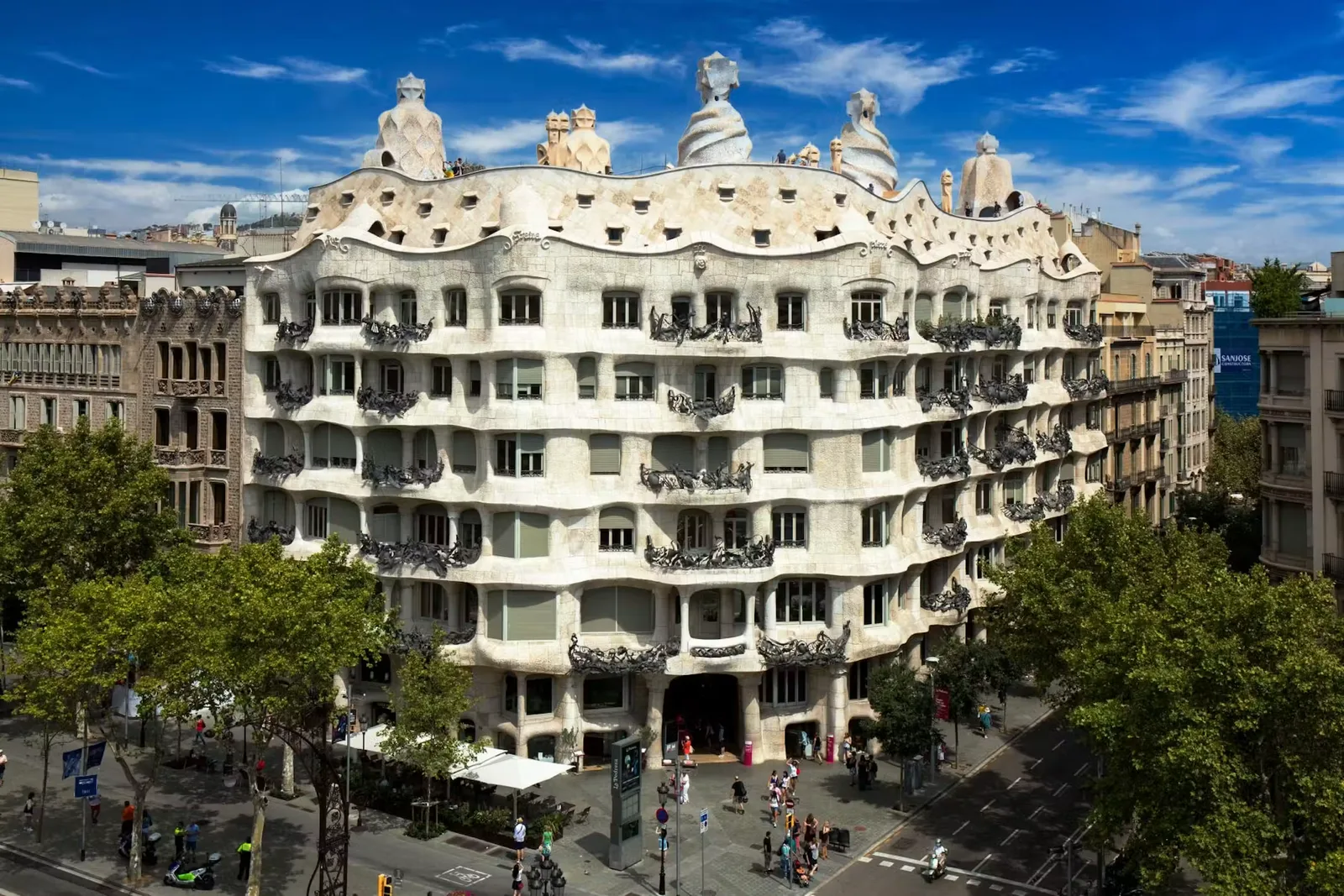
Casa Milà at a glance
- Location
- Passeig de Gràcia, 92 · Barcelona
- Area
- Eixample
- Recommended visit
- Approx. 1–1.5 hours
- Advance booking
- Recommended
- Built
- 1906–1912
- Architect
- Antoni Gaudí
- UNESCO
- Part of the Works of Antoni Gaudí since 1984
- Best known for
- Rooftop, chimneys, attic and undulating stone façade
- Accessibility
- Most interior visitor spaces are step-free; the uneven rooftop is not wheelchair accessible — View accessibility ↓
- Opening hours
- Seasonal daytime hours plus separate night sessions — View opening hours ↓
- Tickets
- Daytime, sunset, night, early-entry and flexible formats — View ticket options ↓
About Casa Milà
Casa Milà occupies a prominent corner of Passeig de Gràcia and Carrer de Provença. It contains two connected blocks of apartments, each organised around a large internal courtyard. Gaudí treated the entire building as a coordinated system: structure, daylight, ventilation, circulation and decoration support one another rather than competing for attention.
Visitors move through the courtyards, a recreated early-twentieth-century tenants’ apartment, the attic’s Gaudí exhibition and the rooftop. This route makes Casa Milà especially valuable for understanding how Gaudí approached everyday urban living—not only how he shaped a memorable exterior.
The history of Casa Milà
Roser Segimon and Pere Milà commissioned Gaudí to design their new home and rental apartments in 1906. Segimon was the owner; the couple planned to occupy the principal floor while tenants lived in the other apartments. Construction was completed in 1912.
The building provoked fascination and criticism. Its restless stone frontage ignored the neat visual order expected on the Eixample, while its size and unconventional forms created disputes with municipal rules. Satirical drawings compared it with a quarry, a cliff and other unruly natural formations.
Its reputation changed dramatically over time. Casa Milà’s column structure, flexible apartment plans, large ventilation courtyards and integrated garage anticipated ideas that would become central to modern architecture. In 1984, it was included in UNESCO’s original inscription of the Works of Antoni Gaudí.
Why is Casa Milà called La Pedrera?
Casa Milà is the building’s official name, taken from the family who commissioned it. La Pedrera is the nickname Barcelona gave it; in Catalan, the words mean “the stone quarry”. The name refers to the rough, quarry-like appearance of its continuous limestone façade.
Both names describe exactly the same building. Casa Milà is useful when discussing the commission and its owners, while La Pedrera is the name many visitors, local institutions and ticket products use in everyday conversation.
Gaudí and Casa Milà
Casa Milà belongs to Gaudí’s mature period and was his last major civil commission. By removing conventional load-bearing walls from the apartment plans, he allowed rooms to be arranged more freely around a framework of stone and brick pillars. The façade could then behave like a self-supporting curtain rather than carrying the floors in the usual way.
The two courtyards solve the practical problem of bringing daylight and ventilation deep into a large city block. Above them, 270 lightweight brick catenary arches form the attic and create an insulating chamber beneath the roof. On top, stairwell exits, ventilation towers and chimneys perform necessary jobs while becoming sculptural forms.
That union of structure and expression is the reason architects value Casa Milà so highly. The rooftop is spectacular, but the building becomes more rewarding when you recognise how each memorable space grows from a functional decision.
See how these ideas developed across his career in our guide to Antoni Gaudí.
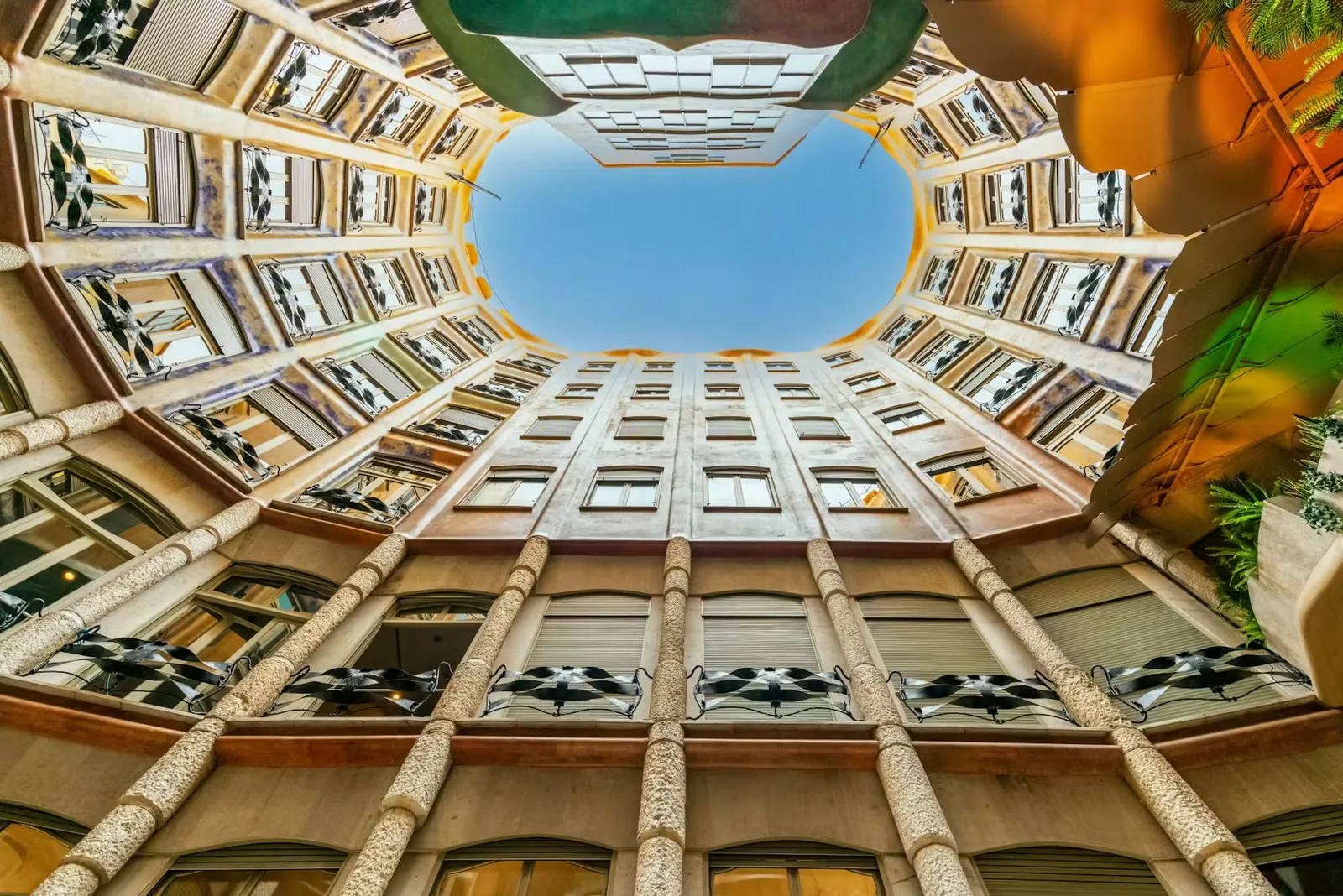
What to see at Casa Milà
The stone façade
Step across Passeig de Gràcia before entering to read the long elevation as one continuous surface. Limestone appears to rise and fall like an eroded cliff, while wrought-iron balconies introduce a darker, more irregular rhythm. Because the façade does not carry the floor slabs in the conventional way, openings could be placed with unusual freedom.
The courtyards
The circular Passeig de Gràcia courtyard and elliptical Provença courtyard are the building’s sources of light, air and movement. Look upward to see how window sizes, painted walls, columns and suspended staircases turn an internal service space into architecture with the same importance as the street façade.
The tenants’ apartment
The recreated apartment restores the domestic scale of the building. Furniture, service rooms and circulation show how an affluent Barcelona family might have lived here in the early twentieth century. It also makes the flexible plan and abundance of natural light easier to understand.
The attic and Gaudí exhibition
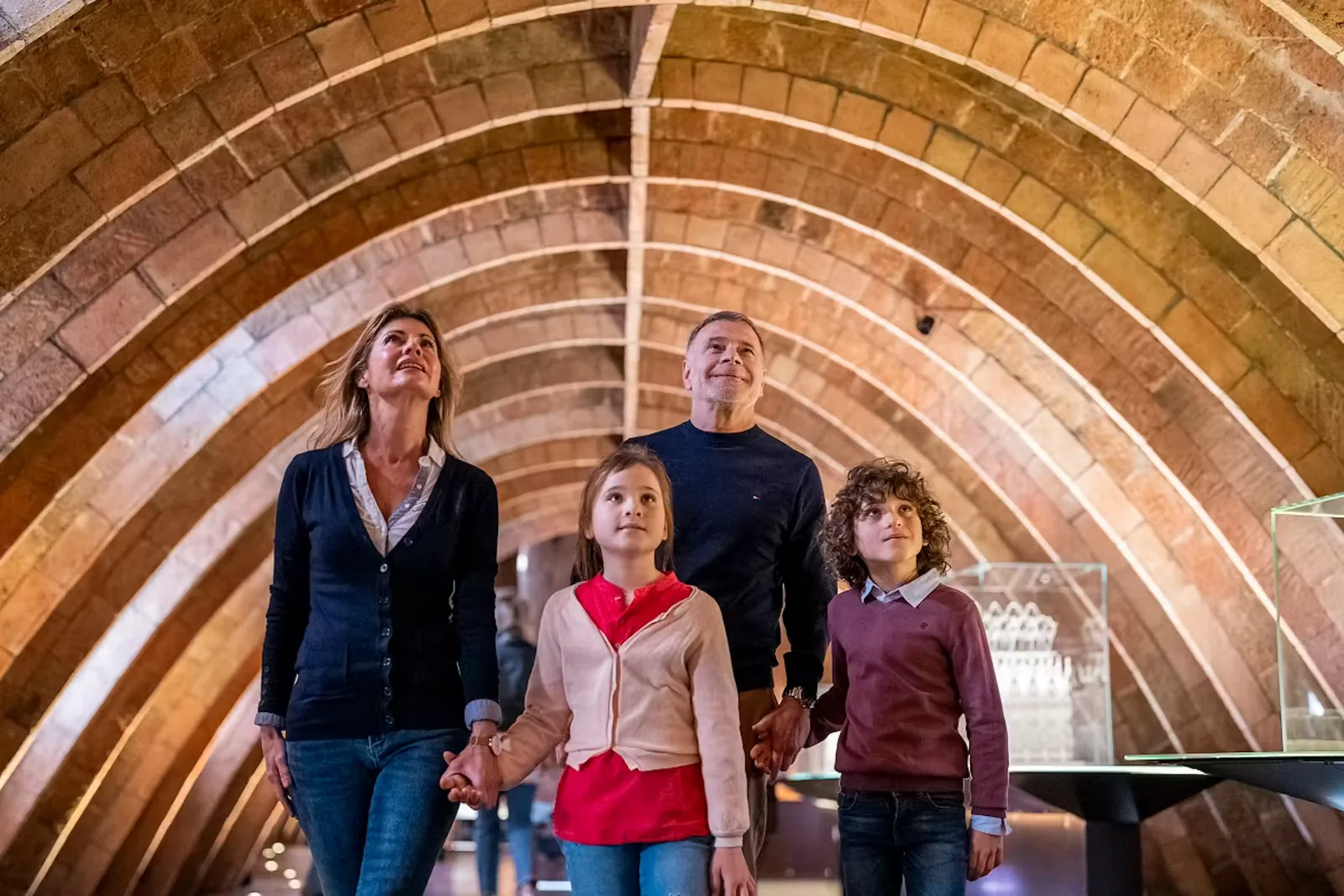
The former laundry and insulating level is formed by 270 brick catenary arches. Their changing heights create a calm, rib-like sequence beneath the roof. The Gaudí exhibition uses models and interpretation to connect Casa Milà with the architect’s structural methods and wider body of work.
The rooftop
The roof is a changing promenade rather than a flat viewing platform. Steps rise and fall over the attic vaults, bringing you close to stairwell exits, ventilation towers and grouped chimneys. Openings between the forms frame the city and, from one carefully positioned arch, Sagrada Família.
Chimneys and ventilation towers
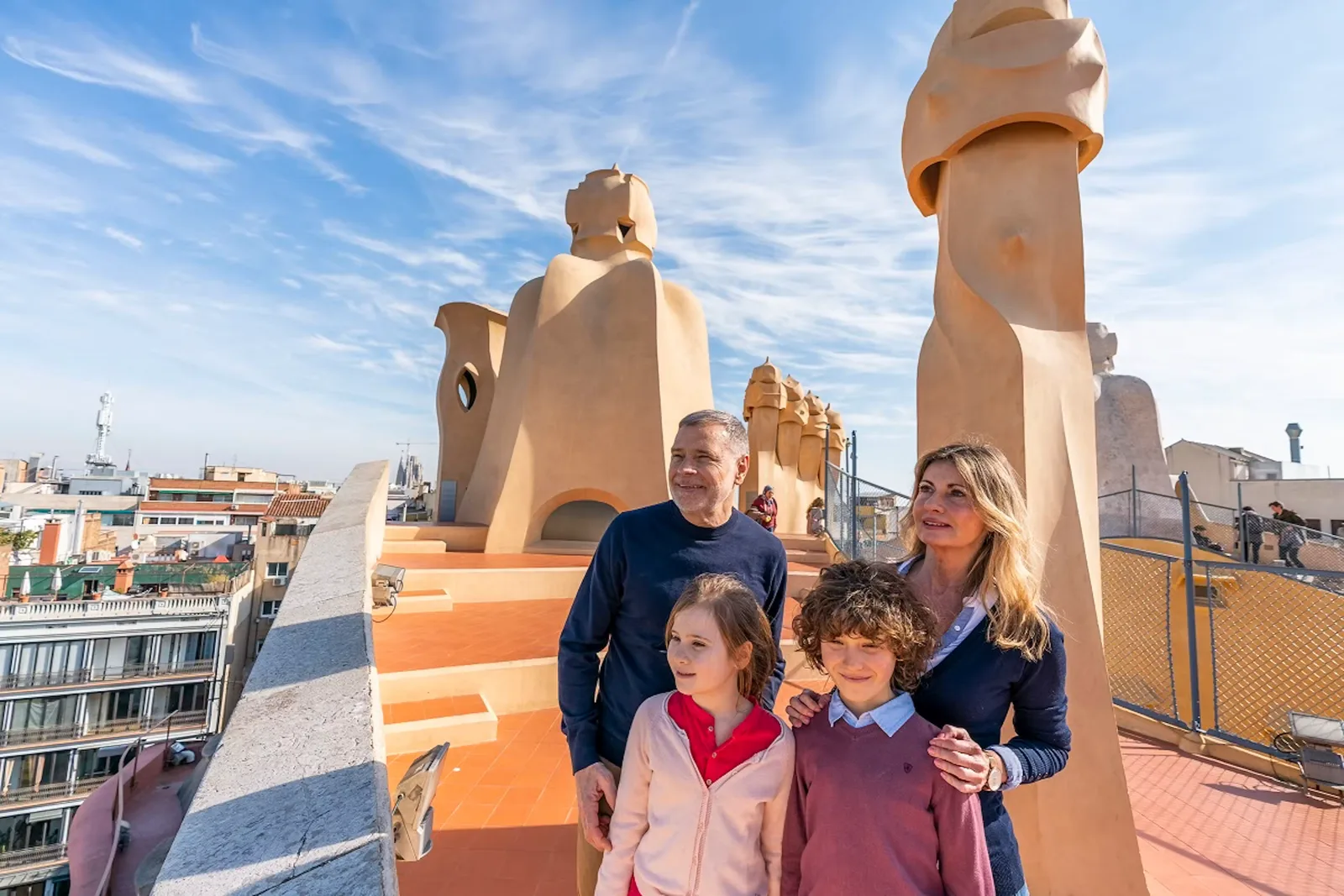
The rooftop figures are functional before they are decorative. Twenty-nine chimneys once served the central-heating flues, while ventilation towers renewed air in the attic. Curves, plaster and trencadís soften their mass and turn building services into an unforgettable skyline.
The rooftop at La Pedrera
Casa Milà’s rooftop is important because Gaudí refused to treat building services as things to hide. Six stairwell exits, ventilation towers and groups of chimneys rise from the changing roof levels as a purposeful architectural composition. Their curved profiles reduce visual weight, while plaster, stone, marble, ceramic and even recycled glass protect and articulate the surfaces.
The route follows the rises and falls created by the attic vaults below. That makes the visit more physical than a normal roof terrace: expect steps, exposed sun and shifting viewpoints rather than one level panorama. The city appears between the sculptural forms, and Gaudí used one small arch to frame Sagrada Família in the distance.
Weather matters. The rooftop is exposed and can close when rain or unsafe conditions make its uneven surfaces hazardous. If the roof is your main reason for visiting, allow flexibility and check the conditions attached to your selected ticket.
Is Casa Milà worth visiting?
Casa Milà is worth visiting when you want to understand how Gaudí made a complete building work. The courtyards, flexible apartment structure, attic and rooftop form a coherent sequence, and the standard route gives architecture enthusiasts more space and structural context than Barcelona’s more theatrical house visits.
The trade-off is that the recreated apartment feels restrained beside the roof, and the exterior is less immediately colourful than Casa Batlló. With limited time, prioritise Casa Milà if rooftops, engineering and apartment design interest you. Choose another landmark if you mainly want decorative intensity, religious symbolism or an outdoor landscape.
Casa Milà or Casa Batlló?
Choose Casa Milà if…
You want the larger and more architectural visit. Its courtyards, apartment, catenary attic and long rooftop route explain how Gaudí organised structure, daylight and domestic life. The experience is spacious, material and relatively restrained.
Choose Casa Batlló if…
You want colour, intricate interiors and a more theatrical digital experience. Casa Batlló is more compact, but its Noble Floor, blue light well and immersive additions create a stronger sensory rush.
Neither is universally better. Choose according to your curiosity, or read our complete Casa Batlló versus La Pedrera comparison.
Planning your Casa Milà visit
How much time do you need at Casa Milà?
A quick route through the principal spaces can fit into about an hour. Most first-time visitors should allow 1 to 1.5 hours. If you enjoy architectural models, want to study the period apartment or plan to photograph the rooftop carefully, leave closer to two hours.
Best time to visit Casa Milà
The official venue identifies 09:00–10:00 and visits from 16:00 onwards as generally less crowded and more comfortable. Early entry gives you fresh attention for the apartment and attic; late afternoon can bring warmer, lower light to the rooftop. Midday is usually the hottest and most exposed time above the city.
Sunset, Sunrise and Night Experience are distinct products rather than guaranteed qualities of a normal entry. Choose the format first, then select an available time that leaves room for the whole route.
Casa Milà opening hours
From 6 March to 1 November 2026, general daytime opening is 09:00–20:30 and Night Experience sessions run from 20:40–22:20. From 2 November 2026 to 25 February 2027, daytime opening is 09:00–18:30 and night sessions run from 19:00–23:00.
The venue lists closures on 7 September and 25 December 2026, and from 11–17 January 2027. Christmas hours and individual experience times can differ, so use the available slots for your chosen date as the final schedule.
Location and how to get there
Casa Milà is at Passeig de Gràcia, 92, on the corner with Carrer de Provença. Metro lines L3 and L5 stop at Diagonal, close to the building. Numerous city buses serve Passeig de Gràcia, and the avenue is easy to reach on foot from central Eixample.
Casa Batlló is farther south on the same avenue, so the two buildings can be connected without another transport journey.
Accessibility
Lifts and ramps connect the courtyards, tenants’ apartment and Gaudí exhibition in the attic. Accessible toilets and a wheelchair-loan service are available; advance reservation is required for the loan service. The venue states a maximum wheelchair width of 63 cm and asks visitors with wider chairs to contact the accessibility team before visiting.
The rooftop is highly uneven and is not wheelchair accessible. A platform at the lift exit provides a partial overview, but it does not reproduce the complete rooftop route. Service dogs may enter all visitable spaces, while tactile models, maps and adapted video guides support visitors with sensory needs.
Casa Milà tickets explained
Casa Milà currently offers several clearly different visit formats. The main distinction is not simply price: decide whether you want a self-guided architectural visit, late light, a guided audiovisual night experience, quieter early access or greater flexibility.
Combination products with other Barcelona cultural sites may also be available. Read the live inclusions, language and cancellation terms before paying.
Our default: For most first-time visitors, La Pedrera Essential is the best starting point because it includes the courtyards, apartment, attic and rooftop. Choose Sunset for late light, Night Experience for atmosphere and a show, or Sunrise when quieter guided access matters most.
| Ticket type | Best for | VisitGaudí advice |
|---|---|---|
| La Pedrera Essential | Most first-time visitors | The standard daytime visit includes the courtyards, tenants’ apartment, attic and rooftop with a multilingual videoguide. This is the clearest introduction to the complete architecture. |
| La Pedrera Sunset | Late light and the full self-guided route | Follows the same principal route at sunset with a videoguide. Choose it for softer rooftop light, not because it includes a different set of main spaces. |
| La Pedrera Night Experience | Atmosphere and an audiovisual rooftop show | A guided night visit in selected languages adds projections, lighting, soundtrack and a glass of cava. It is more theatrical than the normal daytime study of the building. |
| La Pedrera Sunrise | Quieter access before general opening | A guided early visit reaches the main spaces before the general public. Confirm the available language and departure time for your date. |
| La Pedrera Premium | A small-group, in-depth visit | An exclusive English guided visit adds reserved areas, a private-room tasting and a gift. Its price makes it a specialist choice rather than the default. |
| La Pedrera Open Date | Visitors who need date and time flexibility | Provides the Essential daytime route without selecting a fixed date or time in advance, within the stated validity period. It costs more than a timed standard visit. |
Popular entry times and special experiences can sell out. Booking in advance is recommended, especially when you want a particular daytime, sunset or night format. Compare another time or format rather than assuming the whole venue is sold out.
Independent VisitGaudí guide · Tiqets is an external booking platform. We may earn a commission at no extra cost to you.
Casa Milà by day or at night?
The daytime Essential visit is best for seeing materials, apartment details and city views in natural light. Sunset uses the same main self-guided route later in the day, with a videoguide and access to the courtyards, apartment, attic and rooftop. It suits visitors who want warmer rooftop light without turning the visit into a show.
La Pedrera Night Experience is a different product: a guided night visit in selected languages that adds projections, special lighting, soundtrack, a rooftop show and a glass of cava. The principal spaces are included, but the emphasis is atmosphere and storytelling. Choose it as an evening event; choose day or sunset when studying the architecture is the priority.
Can you visit Casa Milà and Casa Batlló on the same day?
Yes. Casa Milà and Casa Batlló are on Passeig de Gràcia and roughly a ten-minute walk apart. Visiting both can be worthwhile for Gaudí enthusiasts because the buildings answer the same urban problem in very different ways.
Allow a relaxed half-day and avoid placing timed entries back-to-back. A useful order is Casa Batlló first for colour and intimate rooms, followed by a break and Casa Milà for its larger structural journey and rooftop. If the rest of your day includes Sagrada Família or Park Güell, choosing only one house usually creates a better pace.
Continue planning your Gaudí visit
Use the Gaudí in one day guide to build a realistic route, or compare ticket formats across Barcelona’s main landmarks before fixing your times.
Frequently asked questions
Is Casa Milà the same as La Pedrera?
Yes. Casa Milà is the official name and La Pedrera is its long-established nickname. Both refer to the same Gaudí apartment building at Passeig de Gràcia, 92.
Why is Casa Milà called La Pedrera?
La Pedrera means “the stone quarry” in Catalan. The nickname refers to the building’s rough, continuous limestone façade, which early observers compared with an exposed quarry.
What can you see inside Casa Milà?
The standard visitor route includes the two courtyards, a recreated tenants’ apartment, the catenary-arched attic with its Gaudí exhibition and the sculptural rooftop.
Is the rooftop at La Pedrera worth visiting?
Yes, especially for architecture and design enthusiasts. It combines panoramic views with working chimneys, ventilation towers and stairwell exits transformed into sculpture. Rooftop access can close in unsafe weather.
Is Casa Milà worth visiting?
It is particularly rewarding if you want to understand Gaudí’s structure, apartment planning and rooftop design. Visitors seeking the most colourful or digitally immersive house experience may prefer Casa Batlló.
How long do you need at Casa Milà?
Allow around 1 to 1.5 hours for the Essential visit. A quick route can be close to an hour, while architecture enthusiasts may want closer to two hours for the exhibition, apartment and rooftop.
Which Casa Milà ticket should I choose?
For most first-time visitors, La Pedrera Essential is the best starting point because it includes the main architectural route. Choose Sunset for late light, Night Experience for a guided audiovisual evening, Sunrise for quieter early access, or Open Date for flexibility.
Is Casa Milà better by day or at night?
Daytime is better for studying the apartment, attic, façade and rooftop in natural light. The Night Experience is a distinct guided event focused on atmosphere, projections and sound. Sunset sits between them while retaining the self-guided main route.
Do Casa Milà tickets sell out?
Popular time slots and special experiences can sell out. Advance booking is recommended when your plans depend on a particular date, time or format.
Is Casa Milà wheelchair accessible?
The courtyards, tenants’ apartment and attic are accessible using lifts and ramps. The rooftop is very uneven and is not wheelchair accessible, although a platform by the lift provides a partial overview. Wheelchairs up to 63 cm wide are accommodated; contact the venue in advance for wider chairs or specific assistance.
Can you visit Casa Milà and Casa Batlló on the same day?
Yes. The buildings are on the same avenue and roughly a ten-minute walk apart. Allow a relaxed half-day and leave a useful buffer between timed entries.