Park Güell
Gaudí’s unrealised garden city became Barcelona’s most imaginative meeting of architecture and landscape.
Park Güell is much more than its famous mosaic dragon. Across the hillside, Gaudí used stone, ceramics, planting and pathways to turn a difficult site into a sequence of rooms, viewpoints and surprises. This guide helps you see the park as a complete work—and plan a visit that does not feel rushed.
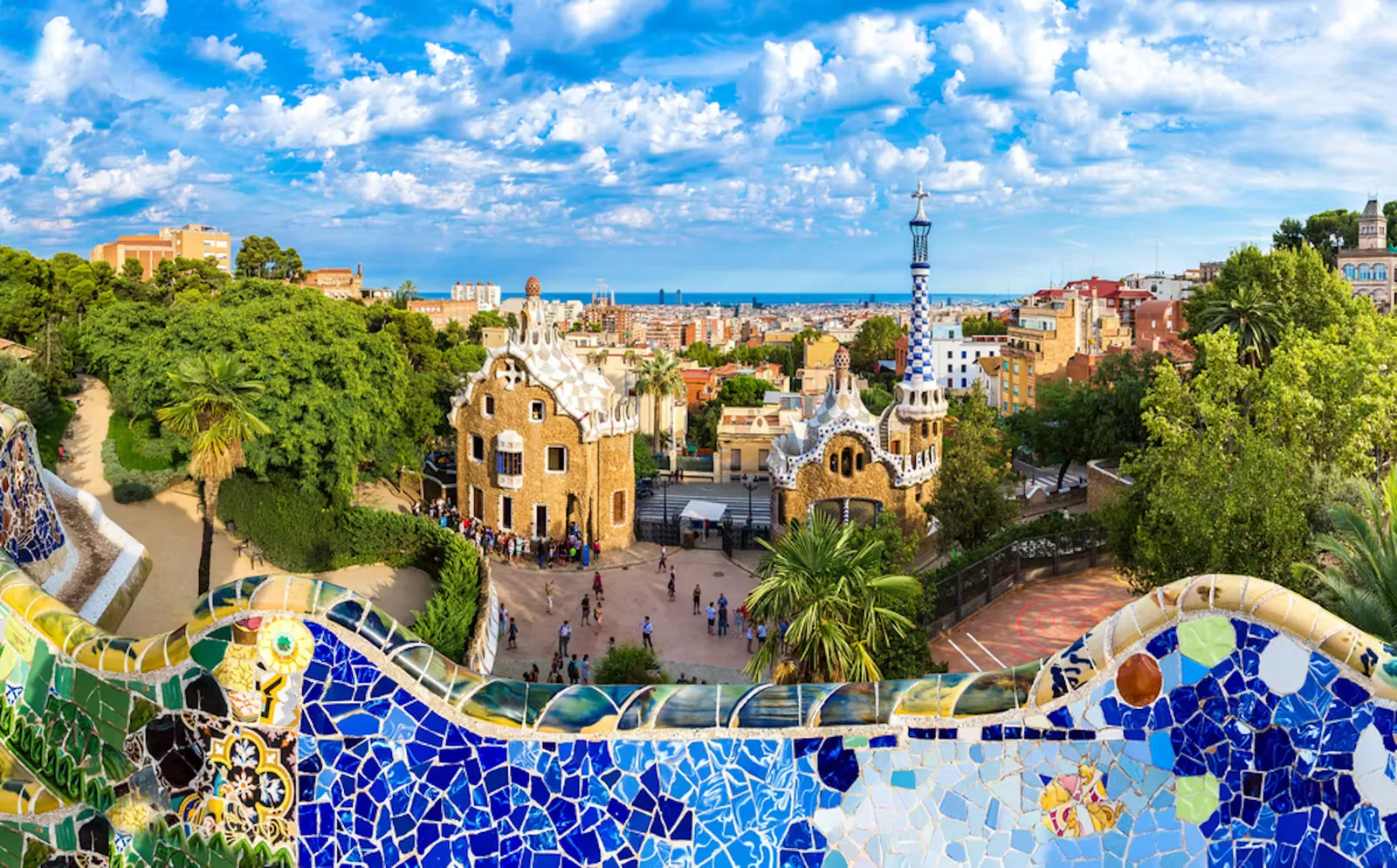
Park Güell at a glance
- Location
- Carrer d’Olot · Barcelona
- Area
- Gràcia · La Salut
- Recommended visit
- Approx. 1.5–2 hours
- Advance booking
- Strongly recommended
- Gaudí involved
- 1900–1914
- Ticketed area
- The 12-hectare regulated visitor area, including the monumental core
- Best time to visit
- Early morning or later afternoon
- Accessibility
- Hilly terrain; easier routes are available from Carretera del Carmel — View accessibility ↓
- Opening hours
- Open all year; visitor entry times vary by season — View opening hours ↓
- Tickets
- Timed admission; advance booking recommended — View ticket options ↓
About Park Güell
Park Güell began as a private residential development for prosperous families, not as a public park. Industrialist and patron Eusebi Güell asked Antoni Gaudí to shape a healthy hillside estate with views over Barcelona. The name deliberately echoed the British residential parks that inspired Güell’s idea.
Gaudí treated the steep terrain as the starting point. Roads and viaducts follow the contours, retaining walls appear to grow from local stone and the central public spaces combine structure with water management. The result is playful, but never arbitrary: almost every curve helps the site work.
The history of Park Güell
Construction started in 1900. The plan allowed for around sixty triangular building plots, but strict building conditions, limited transport and the development’s exclusivity discouraged buyers. Only two houses were built, and work stopped in 1914.
Even before the project ended, the great square hosted civic and social events and the estate was appearing in Barcelona guidebooks. After Eusebi Güell died in 1918, his heirs offered the property to the city. Barcelona agreed to buy it in 1922 and opened it as a municipal park in 1926.
Park Güell was declared a UNESCO World Heritage Site as part of the Works of Antoni Gaudí in 1984. Its importance lies not in a single monument but in the way architecture, engineering, craft and Mediterranean landscape work together across the hill.
Gaudí and Park Güell
Park Güell captures the long creative partnership between Gaudí and Eusebi Güell. By 1900, the architect had already designed Palau Güell and other commissions for his patron. Here, Güell gave him the scale of an entire neighbourhood.
Gaudí designed circulation as carefully as buildings. A three-kilometre network of roads and viaducts was intended to connect the plots without flattening the land. Mediterranean planting needed little water, while collection systems stored rain beneath the Hypostyle Room and helped protect the slope from erosion.
The project also became personal. Gaudí moved into the development’s show house in 1906 and lived there until 1925. The house was designed by his collaborator Francesc Berenguer rather than by Gaudí himself; it now forms the Gaudí House Museum and requires the appropriate combined admission.
Explore the architect’s wider life and ideas in our guide to Antoni Gaudí.
What to see at Park Güell
The Dragon Stairway
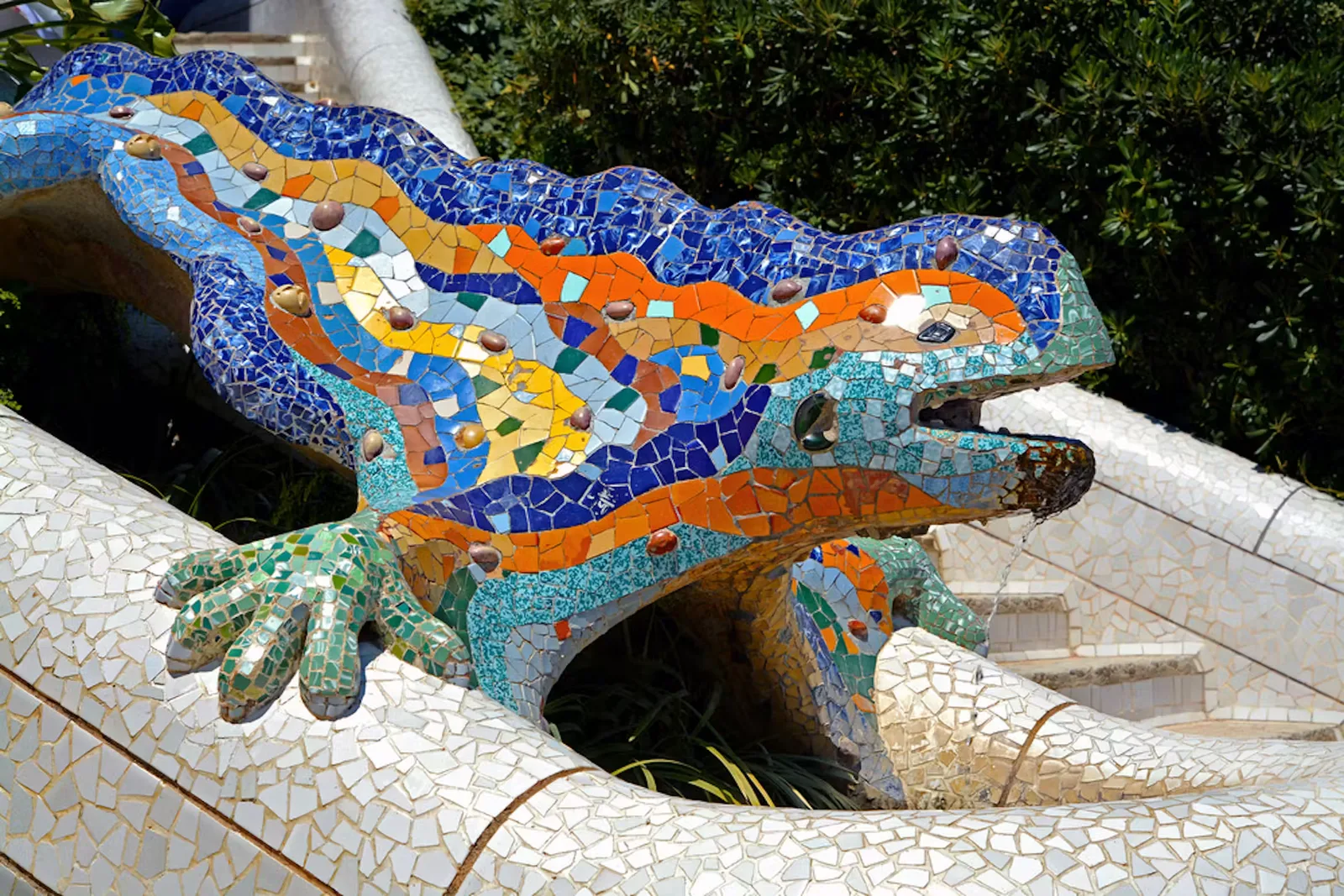
Enter from the Carrer d’Olot side to experience the park’s most theatrical sequence. Twin flights rise past fountains and the Catalan shield to the trencadís-covered dragon—or salamander—that became Park Güell’s emblem. Look beyond the photograph: the water once came from the cistern beneath the Hypostyle Room.
The Hypostyle Room
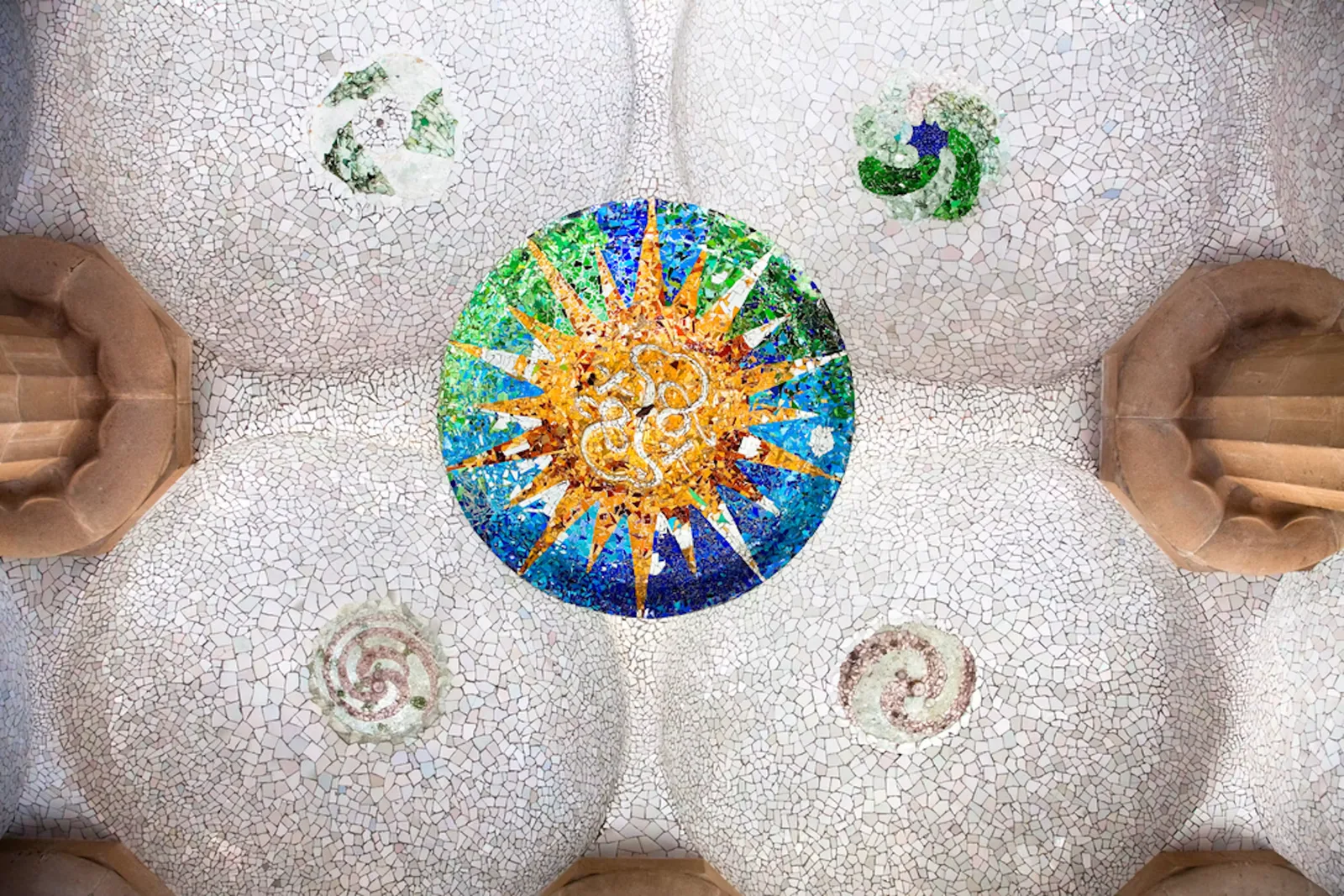
Gaudí intended this forest of columns to house the estate’s market. Eighty-six striated columns carry the square above, while openings and mosaic ceiling medallions break the rhythm. Structure, drainage and decoration are doing several jobs at once.
The Nature Square and serpentine bench
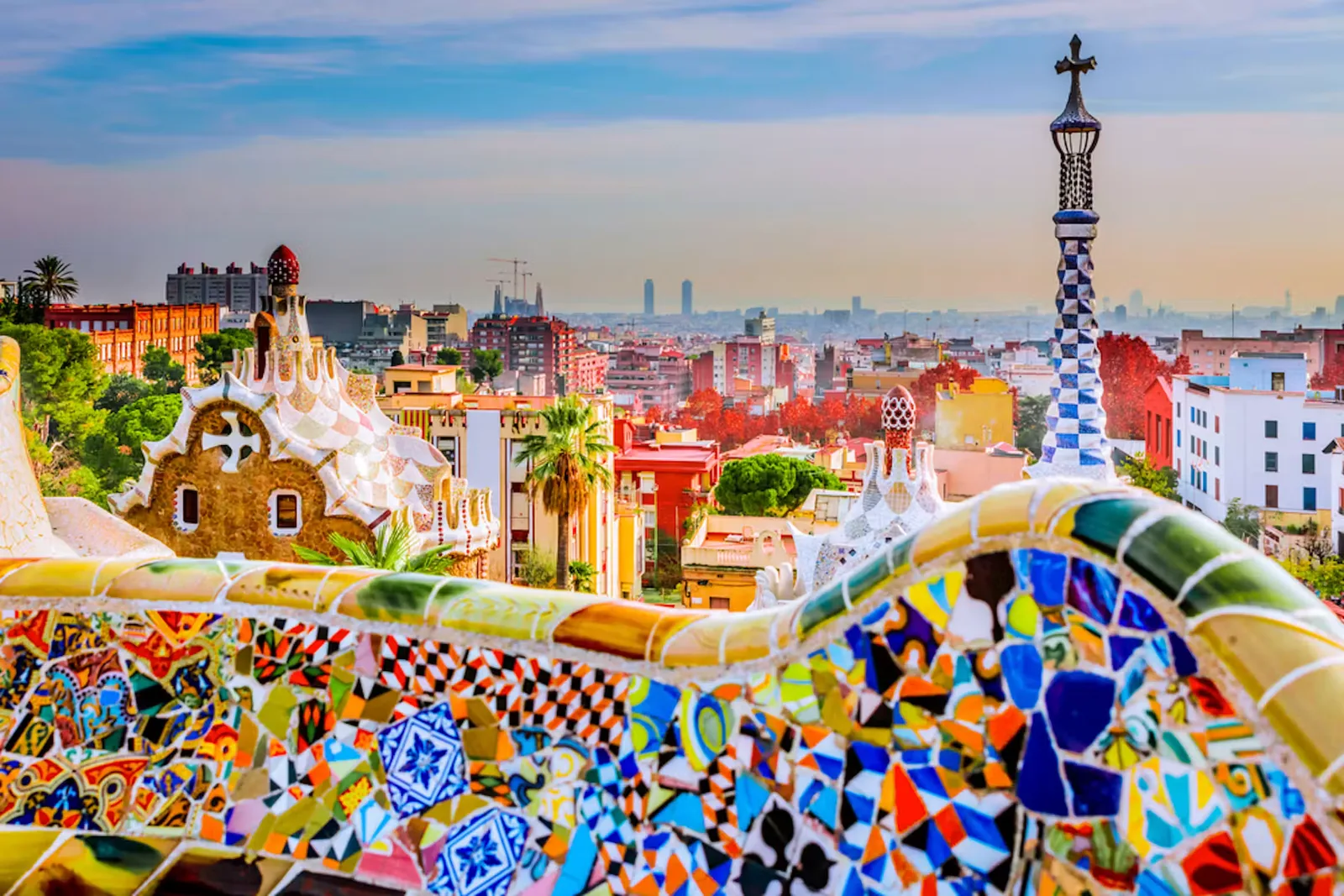
The former Greek Theatre was planned as the community’s gathering place. Its open side frames Barcelona, while the long undulating bench shapes the edge into a social space. The trencadís decoration was created with Josep Maria Jujol and rewards close attention to colour, fragments and changing patterns.
The Porter’s Lodge pavilions
The two gatehouses at Carrer d’Olot turn a practical entrance into something almost storybook. Their irregular stone walls, tiled roofs and fantastical chimneys announce that the rules of the city have changed before you take a single step into the park.
Gaudí House Museum
The pink house was the development’s show home and Gaudí’s residence from 1906 to 1925. It now presents furniture and personal material connected with the architect. Admission is not part of every standard park ticket, so choose a combined option if the museum matters to you.
The viaducts and pathways
Leave time for the quieter routes beyond the central monuments. Inclined columns, rough local stone and planted embankments let roads cross the hill with minimal disturbance. These passages make Gaudí’s larger landscape idea easier to understand than any single mosaic detail.
What is the Monumental Zone?
“Monumental Zone” is the familiar name for the part of Park Güell where the best-known Gaudí spaces are concentrated: the Carrer d’Olot entrance and pavilions, Dragon Stairway, Hypostyle Room, Nature Square, Laundry Room Portico and Austria Gardens.
The current visitor ticket is broader than that name suggests. It gives access to the park’s 12-hectare regulated area, including monumental, green and panoramic areas. Entry is controlled to protect the World Heritage architecture, manage visitor numbers and make movement through the busiest spaces safer.
Some especially popular points inside this area have an additional flow-control point or one-way route. A ticket gives access to the site, but very small spaces can still have limited capacity.
Is Park Güell free?
For most visitors, the answer is no: you need a timed ticket to enter the regulated visitor area and see the celebrated Gaudí spaces. Free morning and evening access periods are reserved for local residents and eligible Passi Verd users, not for tourist visits.
Park Güell also has adjacent woodland and neighbourhood spaces outside the ticketed visitor area. They can be pleasant for a walk, but they are not a free substitute for the monumental core. If the dragon, Hypostyle Room, Nature Square and gatehouses are the reason you are coming, book the regulated-area ticket.
Planning your Park Güell visit
Which Park Güell entrance should you use?
- Classic first impression→ Carrer d’Olot
- Taxi or limited mobility→ Carretera del Carmel
- Arriving via H6 / D40→ Travessera de Dalt side
The classic arrival is from Carrer de Larrard towards the Carrer d’Olot gatehouses. It places you immediately in front of the two entrance pavilions and Dragon Stairway, but reaching it from the city involves an uphill approach.
Carretera del Carmel is practical for taxis, the tourist-bus approach and visitors with reduced mobility; the park’s official accessibility guidance recommends this entrance. From buses H6 and D40 on Travessera de Dalt, the entrances at Avinguda del Santuari de Sant Josep de la Muntanya—with escalators—or Carrer de Larrard are around a ten-minute walk.
Is Park Güell difficult to walk?
Park Güell is a hillside landscape, so slopes, steps and uneven surfaces are part of the visit. The 12-hectare visitor area is larger than the cluster of famous monuments, and viewpoints or upper paths require more effort. Comfortable shoes and water make a real difference, especially in warm weather.
Families can enjoy the park at a slower pace, but pushchairs may need detours around stairs. Older visitors and anyone with limited mobility should use the official easier-route guidance and consider arriving at Carretera del Carmel rather than planning around the most photogenic entrance.
How much time do you need at Park Güell?
A focused visit to the central monuments can fit into about an hour, but it leaves little time for views or quieter paths. For a first visit, allow around 1.5 to 2 hours. Add more time if you enjoy photography, want to walk the viaducts slowly or have a combined ticket for the Gaudí House Museum.
Best time to visit Park Güell
An early visitor slot usually gives you cooler conditions and fresh energy for the climb. Later afternoon can bring gentler light across the terrace and city, although the effect depends on season and weather. Around midday, shade and water matter more—especially in summer.
Because entry is timed, choose a slot you can reach comfortably. There is no advantage in selecting an early time if the journey to the hill makes you anxious or late.
How to get to Park Güell
Metro line L3 to Lesseps is a common route, followed by roughly twenty minutes on foot and a noticeable climb. From Lesseps, the official route recommends Avinguda del Santuari de Sant Josep de la Muntanya, where escalators ease part of the ascent.
Buses H6 and D40 stop on Travessera de Dalt, around a ten-minute uphill walk from suitable entrances. A taxi to Carretera del Carmel is the simplest option when hills or mobility are a concern. Driving is not recommended because most nearby street parking is reserved for residents.
Accessibility
The park’s topography means not every route is step-free. Official guidance recommends entering at Carretera del Carmel or Carrer Marianao and identifies two easier routes: an approximately 50-minute architectural route and a shorter route towards Casa Trias.
A limited number of wheelchairs can be reserved in advance, and accessible parking spaces are available near the Carretera del Carmel entrance for accredited vehicles. Conditions and route availability can change, so visitors with specific needs should review the current official accessibility map before travelling.
Park Güell opening hours
Park Güell is open throughout the year. Timed visitor admission starts from 09:30, while the final bookable entry changes with the season and daylight. Early-morning and late-evening periods are reserved for residents and eligible Passi Verd users.
Your ticket allows a 30-minute window after the printed entry time to pass the access control. Once inside, you can stay and explore at your own pace, but re-entry is not allowed after you leave. Check the available entry times for your selected date when booking.
Park Güell ticket options
The right ticket depends on whether you want to explore independently, add historical context or include the house where Gaudí lived. The general Park Güell page on Tiqets lets you compare the formats and live availability for your date.
Do not assume similarly named products include the same areas, audio content or museum access. Read the selected product details before paying.
Our default: For most first-time visitors, standard timed admission is sufficient. Choose a guided visit for more historical context, add the Gaudí House Museum if it matters to you, or compare combination products when another major Gaudí landmark is part of the same day.
Timed entry to the regulated visitor area can sell out, especially at popular times. Booking in advance is recommended. If standard admission is unavailable, a guided visit or combination product may still have availability.
| Ticket type | Best for | VisitGaudí advice |
|---|---|---|
| Standard Park Güell admission | Independent first-time visitors | Choose a timed entry to explore the monumental, green and panoramic areas at your own pace. Check the exact inclusions for your date. |
| Guided tour | History and architectural context | A guide can reconnect the famous details to Güell’s original garden-city plan. Confirm language, group size and meeting point. |
| Park + Gaudí House Museum | Visitors interested in Gaudí’s life | Use a combined product when the house museum matters to you; do not assume it is included in every standard ticket. |
| Combination products | A broader Gaudí itinerary | Some options pair Park Güell with another landmark. Protect both timed entries and allow a realistic transfer between them. |
Independent VisitGaudí guide · Tiqets is an external booking platform. We may earn a commission at no extra cost to you.
Can you visit Park Güell and Sagrada Família on the same day?
Yes. For many visitors, this is the most rewarding two-landmark Gaudí day: Park Güell reveals his landscape thinking, while Sagrada Família brings his structural and spiritual ideas together on a monumental scale.
Book both timed entries before building the route. A taxi can simplify the transfer; public transport also works but includes walking and changes. Leave at least 45–60 minutes between the end of one visit and the next entry so traffic, the hill and security checks do not turn the day into a race.
Choose Park Güell first if cooler walking conditions matter. Choose Sagrada Família first if you want to give the basilica your freshest attention. Our Park Güell and Sagrada Família itinerary gives both landmarks enough space, while the Gaudí in one day guide adds wider planning context.
Continue your Gaudí journey
For colour and theatrical interiors, continue with Casa Batlló. For structure, courtyards and one of Barcelona’s great rooftops, choose Casa Milà · La Pedrera. You can also compare Gaudí landmarks or use the ticket guide to review the main visit formats.
Frequently asked questions
What is the Monumental Zone at Park Güell?
The name is commonly used for the heritage-rich core with the Dragon Stairway, Hypostyle Room, Nature Square, gatehouses and other celebrated Gaudí spaces. Current visitor admission covers a wider 12-hectare regulated area that also includes green and panoramic sections.
Is Park Güell free?
Not for a normal tourist visit to the celebrated Gaudí area. Visitors need a timed ticket for the regulated area. Adjacent woodland and neighbourhood spaces do not work under exactly the same access system, while free early and late access periods are reserved for local residents and eligible Passi Verd users.
Which entrance is best?
Carrer de Larrard leads towards the Carrer d’Olot gatehouses and is best for the classic monumental arrival. Carretera del Carmel is generally the most practical for taxis and visitors who need an easier accessible approach. Your arrival route and ticket instructions should decide the entrance.
How long should I spend at Park Güell?
Allow about 1.5 to 2 hours for a first visit. A quick route through the central monuments can be shorter, while photography, quieter viaducts or the Gaudí House Museum make a slower visit worthwhile.
Is Park Güell difficult to walk?
Expect hills, steps and some uneven paths. The park is large and the approach can also be uphill. Official easier routes are available, but not every path or viewpoint is step-free.
Do Park Güell tickets sell out?
Timed admission can sell out for popular dates and times. Book ahead if your itinerary depends on a particular slot. When standard admission is unavailable, guided visits or combination products may still have places.
Is the Gaudí House Museum included?
Only with a ticket or combination that explicitly includes it. Read the live product inclusions before paying.
Can I visit Park Güell and Sagrada Família on the same day?
Yes. It is a rewarding pairing for many visitors, but both use timed entry and Park Güell sits on a hill. Leave a generous transfer buffer and avoid booking the two slots back-to-back.