Casa Vicens
Gaudí’s first major house is a compact manifesto of colour, craft and architectural confidence.
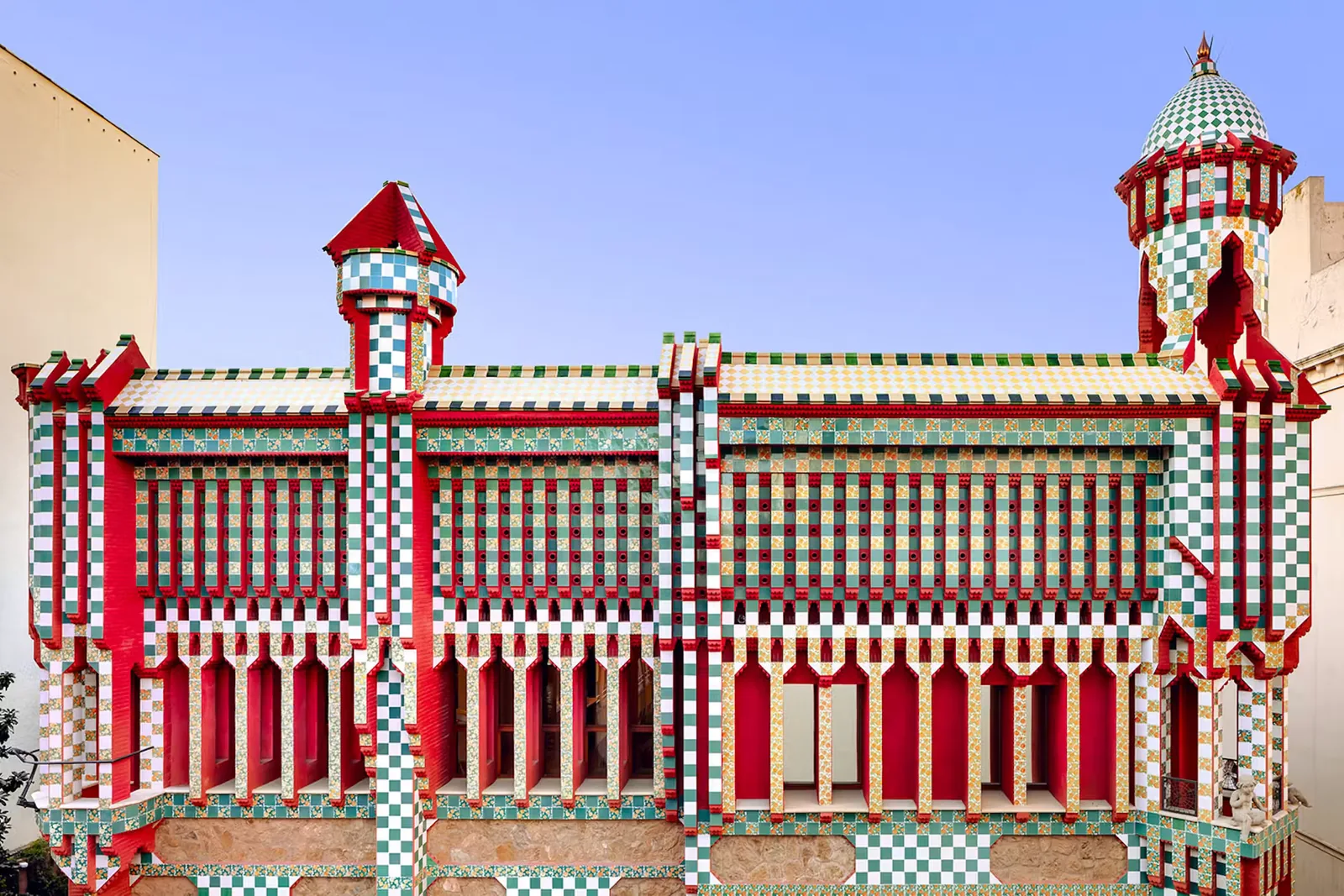
Built before Casa Batlló and Casa Milà, Casa Vicens captures Antoni Gaudí at the beginning of his career. Green-and-white tiles, strict geometry, lush plant motifs and Mudéjar- and Orientalist-inspired details make it look unlike his later, more fluid buildings. Its intimate scale lets you get unusually close to the moment his architectural language began.
Casa Vicens at a glance
- Location
- Carrer de les Carolines, 20–26 · Barcelona
- Area
- Vila de Gràcia
- Recommended visit
- Approx. 1–1.5 hours
- Advance booking
- Recommended for a preferred time
- Built
- 1883–1885
- Architect
- Antoni Gaudí
- UNESCO
- Part of the Works of Antoni Gaudí since 2005
- Best known for
- Colourful ceramic façades, geometric ornament and richly decorated rooms
- Opening hours
- Date-specific and seasonal — Plan your visit ↓
- Tickets
- Self-guided, guided and combination options — Compare tickets ↓
- Accessibility
- Reduced-mobility access is supported; heritage-area limitations can apply — Read accessibility advice ↓
About Casa Vicens
Casa Vicens was conceived as a summer home on what was then the edge of Barcelona. Today it sits on a narrow residential street in Gràcia, but its surfaces still feel almost garden-like: yellow carnations become tile patterns, palm leaves become ironwork and painted plants continue across walls and ceilings.
The building is smaller and easier to read than Gaudí’s better-known apartment houses. That is part of its appeal. You can follow the relationship between façade, garden, dining room, covered porch, smoking room, bedrooms and rooftop without the scale or crowds of a monumental site.
The history of Casa Vicens
In 1883, stock and currency broker Manel Vicens i Montaner commissioned the young Antoni Gaudí to design a summer residence for his family. It became Gaudí’s first major house and was built between 1883 and 1885, when the architect was around thirty years old.
Gaudí used the commission to bring architecture and decorative arts together. Rough stone, red brick, green-and-white ceramics, timber, iron, sgraffito and painted ornament form a deliberate whole. Local plants shaped the design too: the yellow carnations found on the site inspired one of the façade’s recurring ceramic motifs.
The house was enlarged in 1925 by architect Joan Baptista Serra de Martínez. Its present museum route distinguishes Gaudí’s original work from that later extension, which now helps accommodate visitor services and interpretation. After restoration, Casa Vicens opened as a house museum in 2017.
Why does Casa Vicens look so different from Gaudí’s later buildings?
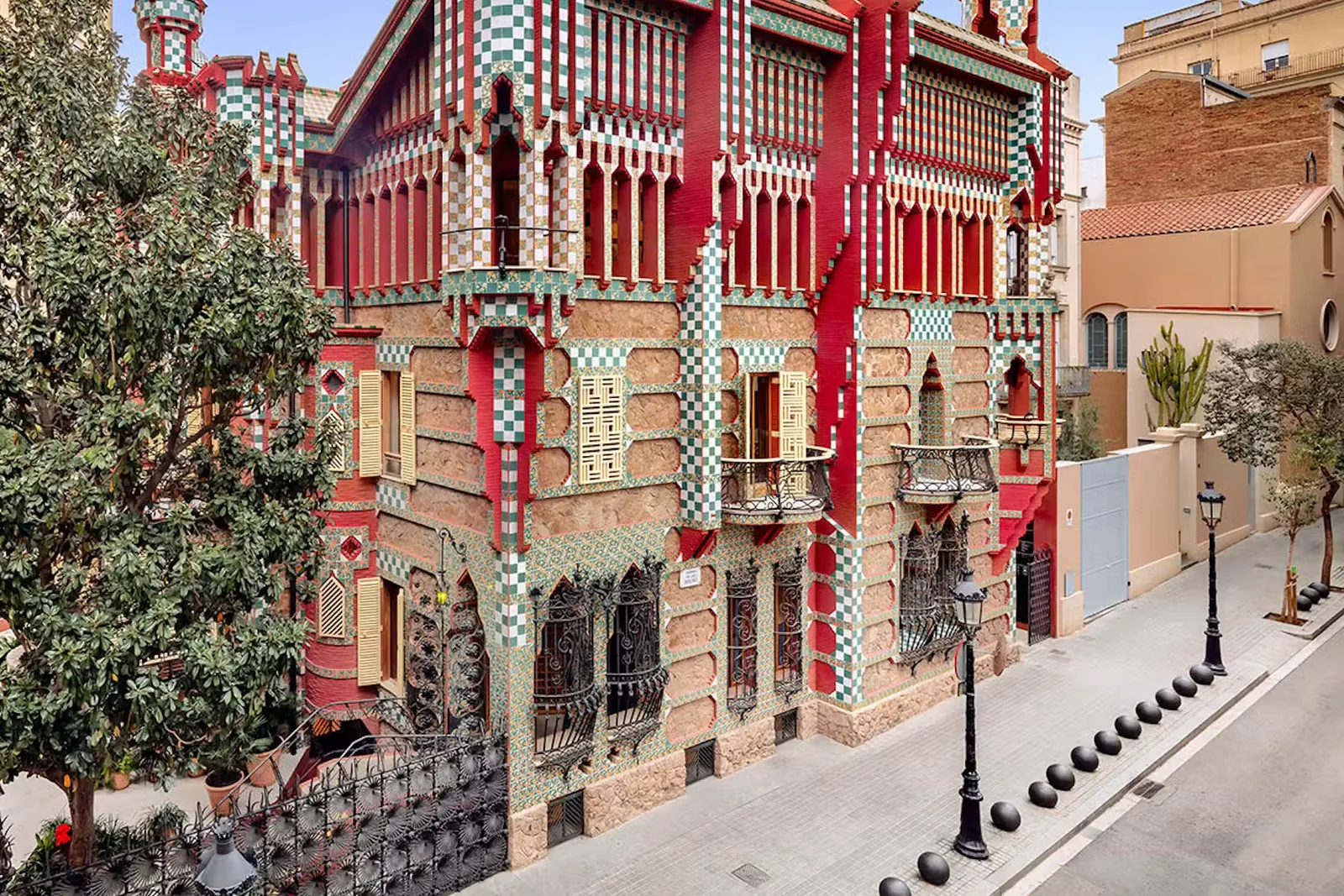
Casa Vicens belongs to Gaudí’s early, eclectic period. Instead of the wave-like stone and bone-like forms of Casa Milà and Casa Batlló, its façades are organised by strong horizontal and vertical grids. Glazed tiles repeat like woven patterns, while projecting volumes, towers and ironwork create a compact silhouette.
Its visual sources are broad. Mudéjar architecture—the Spanish tradition shaped by Islamic craftsmanship—appears in geometric surfaces, layered ceilings and the smoking room’s muqarnas-like plasterwork. The rooftop also draws on forms associated with India, Morocco and Egypt. Gaudí combined those nineteenth-century Orientalist interests with Catalan materials, modern construction and direct observations of nature.
The later Gaudí did not abandon these ideas; he transformed them. Casa Vicens already treats ventilation, water, furniture, craft and garden as one design. What changes in the later houses is the geometry: repeated grids gradually give way to more continuous curves and structurally expressive forms.
What to see at Casa Vicens
The tiled façades
Look at the house from more than one point on Carrer de les Carolines. Green-and-white checkerboards sit beside carnation-patterned ceramics, rough stone and red masonry. The contrast is bold, but the repeated modules hold the composition together.
The entrance hall and dining room
Inside, the boundary between architecture and decoration almost disappears. Sgraffito, ceiling coffers, mosaics and plant motifs surround original furniture designed by Gaudí for Manel Vicens’s collection of paintings by Francesc Torrescassana.
The covered porch
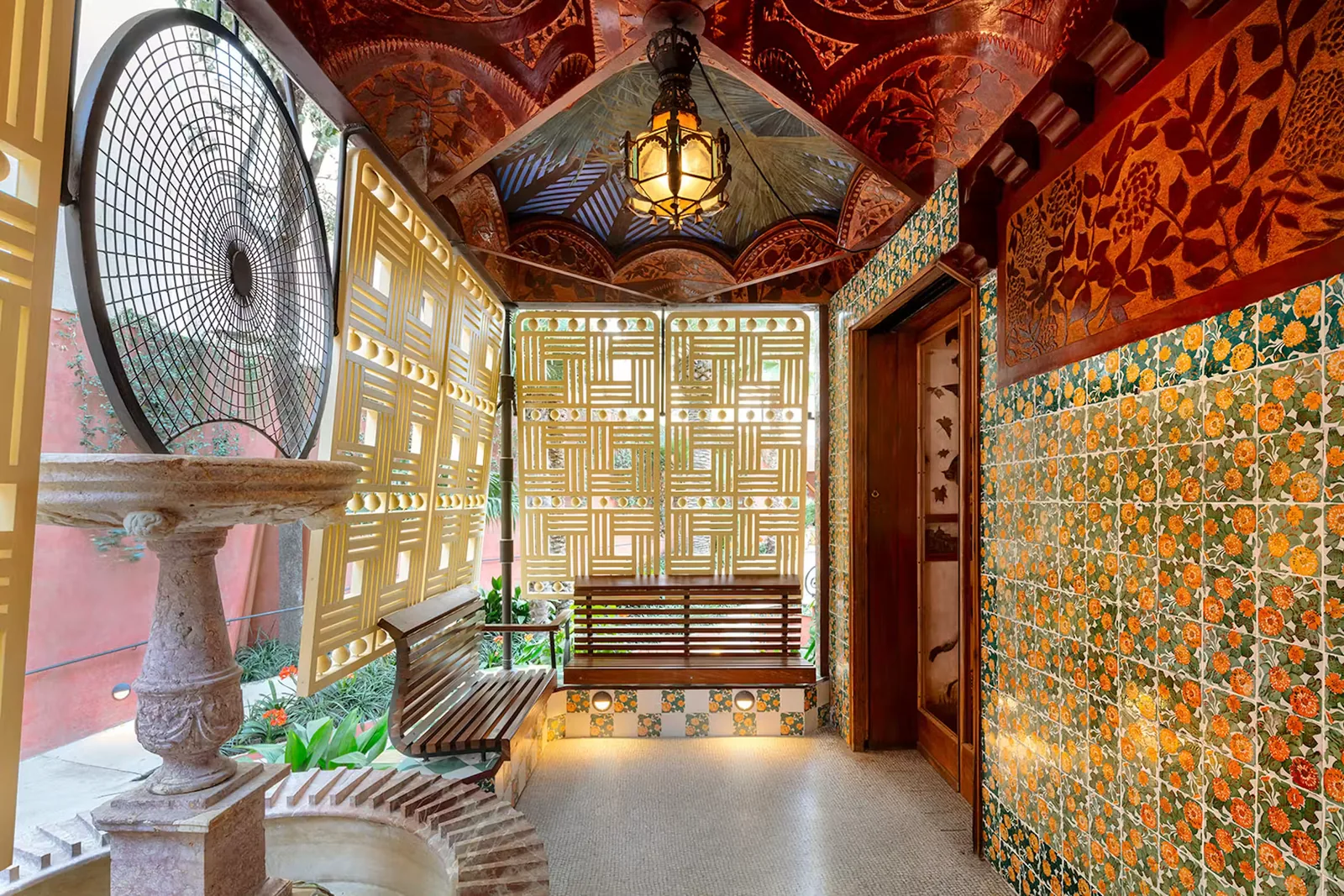
The porch connects the daytime rooms with the former garden. Its restored fan-shaped fountain and adjustable shutters show that atmosphere was practical as well as decorative: moving air, water and shade helped cool the house.
The smoking room
This small room is the interior’s most concentrated burst of colour. Polychrome plaster forms palm-like muqarnas overhead, while papier-mâché tiles and painted floral ceramics create the exotic retreat fashionable in wealthy nineteenth-century homes.
The bedrooms and domed room
Upstairs, bedrooms, a bathroom and sitting room are linked through compact hexagonal circulation spaces. Floral ceilings, sgraffito and a trompe-l’oeil dome extend the garden imagery into the family’s private rooms.
The rooftop
The walkable roof anticipates Gaudí’s later experiments with elevated architectural landscapes. Green-and-white tiled structures, three chimneys and a minaret-like tower reveal the same fascination with distant traditions seen elsewhere in the house.
The permanent exhibition
Displays in the later part of the building explain the original house, the 1925 enlargement and Casa Vicens’s social and artistic setting. Give it time if you want to understand why this youthful commission matters within Gaudí’s career.
Is Casa Vicens worth visiting?
Casa Vicens is worth visiting if you are curious about Gaudí’s beginnings or love ceramics, pattern and interior craft. The visit feels personal: rooms are compact, details are close and the shift from one ornamental world to another happens within a manageable route. It is also usually easier to fit into a quieter Gràcia morning than the city’s largest Gaudí landmarks.
It is not the best single choice for every traveller. Sagrada Família is more monumental, while Park Güell offers a larger outdoor landscape. Casa Vicens earns its place by revealing the young architect before those later masterpieces—and by making his appetite for colour, nature and total design unusually easy to see.
Casa Vicens, Casa Batlló or Casa Milà?
Choose Casa Vicens if…
You want Gaudí’s earliest major house, strong colour, geometric ornament and a more intimate visit away from Passeig de Gràcia.
Choose Casa Batlló if…
You want the most theatrical interior experience. Casa Batlló turns light, colour and flowing marine forms into a compact sensory journey.
Choose Casa Milà if…
You care most about structure, apartment planning and rooftop architecture. Casa Milà is larger, more spatial and less densely decorative.
Gaudí fans will find the contrast between the three more revealing than any ranking. If you have one slot, choose the house that matches what you most want to understand.
Planning your Casa Vicens visit
How much time do you need?
Most visitors should allow 1 to 1.5 hours. A focused self-guided visit can fit into an hour, but the decorated ceilings, smoking room and exhibition reward a slower pace. Leave more time if you plan to use the complete audio guide or study the materials closely.
Best time to visit Casa Vicens
Choose an early slot for a calm start in Gràcia or a late-afternoon visit when you can continue into the neighbourhood for dinner. The rooms are compact, so quieter periods improve the experience. A fixed time also makes it easier to coordinate another landmark without rushing.
Casa Vicens opening hours
Opening days and hours are seasonal and the live schedule is date-specific. Select your planned date before relying on a time: the available entry slots on the booking page are the most useful current guide, and special dates or maintenance closures can change the normal pattern.
Location and how to get there
Casa Vicens is at Carrer de les Carolines, 20–26, in Vila de Gràcia. Fontana and Lesseps stations on metro line L3 are the most useful nearby stops. The final approach is through residential streets, so allow a small buffer rather than timing your arrival to the minute.
Accessibility
Casa Vicens supports visits by people with reduced mobility, but it remains a protected nineteenth-century house and access conditions can differ between spaces. Check the current route and assistance information for your needs before booking, particularly if rooftop access or a larger mobility device matters to your visit.
If step-free access is essential, contact the venue in advance and allow staff to direct you through the appropriate museum route. This avoids relying on a general accessibility label that may not describe every historic area.
Casa Vicens tickets explained
The main decision is simple: explore independently or add a guide. Tiqets also lists multi-house combinations and guided routes on selected dates. Product names and inclusions can change, so read the live details before payment.
Our default: For most first-time visitors, standard self-guided admission is sufficient and gives you time to follow the audio guide at your own pace. Choose a guided visit when the history, symbolism and links to Gaudí’s later work are the main reason you are going.
| Ticket type | Best for | VisitGaudí advice |
|---|---|---|
| Standard entry | Most first-time visitors | The self-guided route is sufficient for most visitors and currently includes a mobile audio guide. Bring earphones and check the exact inclusions shown for your date. |
| Guided visit | History, symbolism and architectural context | A guide helps connect the dense decorative details with Gaudí’s early career. Current guided products typically last about one hour; confirm the language and departure time. |
| Three Gaudí houses combination | Visitors planning Casa Vicens, Casa Batlló and Casa Milà | Can simplify a multi-house plan, but compare the included ticket levels and leave comfortable time between the three entries. |
| Gaudí houses guided tour | A connected story across several homes | Longer guided products may combine Casa Vicens with other houses and walking sections. Routes, duration, group size and included admissions vary by date. |
Casa Vicens controls capacity and some timed entries and guided departures can fill. Booking ahead is useful when your itinerary depends on a particular time or language. Compare another time or format before changing the rest of your day.
Independent VisitGaudí guide · Tiqets is an external booking platform. We may earn a commission at no extra cost to you.
What can you combine with Casa Vicens?
Park Güell is the most natural major pairing because both sit north of central Barcelona. They are not adjacent, so leave transport time and avoid back-to-back entry slots. Together they show two very different moments: the young Gaudí’s patterned summer house and his later landscape architecture.
You can also head from Gràcia toward Passeig de Gràcia for Casa Batlló or Casa Milà. That comparison is especially rewarding for architecture enthusiasts, but two house interiors are normally enough for one day. Use the Gaudí in one day guide to keep the route realistic.
Frequently asked questions
Is Casa Vicens worth visiting?
Yes—especially if you want to see where Gaudí’s architectural language began, enjoy decorative craft or prefer a smaller and more intimate house visit. If this is your only Gaudí attraction, Sagrada Família or Park Güell offers a more monumental first encounter.
Why does Casa Vicens look different from Gaudí’s later buildings?
It belongs to Gaudí’s early, eclectic period. Geometric grids, colourful ceramic repetition and Mudéjar- and Orientalist-inspired decoration dominate here; his later houses developed more continuous curves and structurally expressive forms.
How long do you need at Casa Vicens?
Allow about 1 to 1.5 hours. An hour can cover the principal rooms and rooftop, while architecture and design enthusiasts may want longer for the exhibition and decorative details.
Which Casa Vicens ticket is best?
For most first-time visitors, standard self-guided admission is sufficient and lets you set your own pace. Choose a guided visit when historical context and help reading the ornament matter more to you.
Does Casa Vicens have an audio guide?
The current self-guided visit includes a mobile audio guide in multiple languages. Bring a charged phone and earphones, and confirm the inclusions shown with the ticket for your date.
What can you see inside Casa Vicens?
The route includes Gaudí’s richly decorated daytime rooms, the covered porch and smoking room, private rooms upstairs, a rooftop and a permanent exhibition explaining the house and its history.
When was Casa Vicens built?
Gaudí’s original house was designed and built between 1883 and 1885. Architect Joan Baptista Serra de Martínez enlarged it in 1925.
Is Casa Vicens a UNESCO World Heritage Site?
Yes. Casa Vicens joined UNESCO’s serial Works of Antoni Gaudí World Heritage property in 2005.
Is Casa Vicens accessible?
Casa Vicens supports visits by people with reduced mobility, but it is a protected historic house and some areas or experiences can have limitations. Review the current access conditions for your needs before booking and ask the venue in advance if assistance is important.
Casa Vicens, Casa Batlló or Casa Milà—which should I choose?
Choose Casa Vicens for Gaudí’s beginnings, colour and intimacy; Casa Batlló for theatrical interiors and sensory impact; or Casa Milà for structure, apartment design and its sculptural rooftop.
Can you combine Casa Vicens with Park Güell?
Yes. Both are north of central Barcelona and work well in the same half-day, but they are not next door. Leave travel time and a buffer between timed entries.